Jory MacKay on March 18, 2026
 Product manager vs. project manager: Everything you need to know
The terms “product manager” and “project manager” are often (mistakenly) used interchangeably by startup founders and hiring managers, driving confusion within organizations but also for individuals who operate in either role.
At a certain level of growth both personally and as an organization, it’s important to split the two roles apart to understand their unique characteristics, use cases, and value propositions.
Here’s what you need to know:
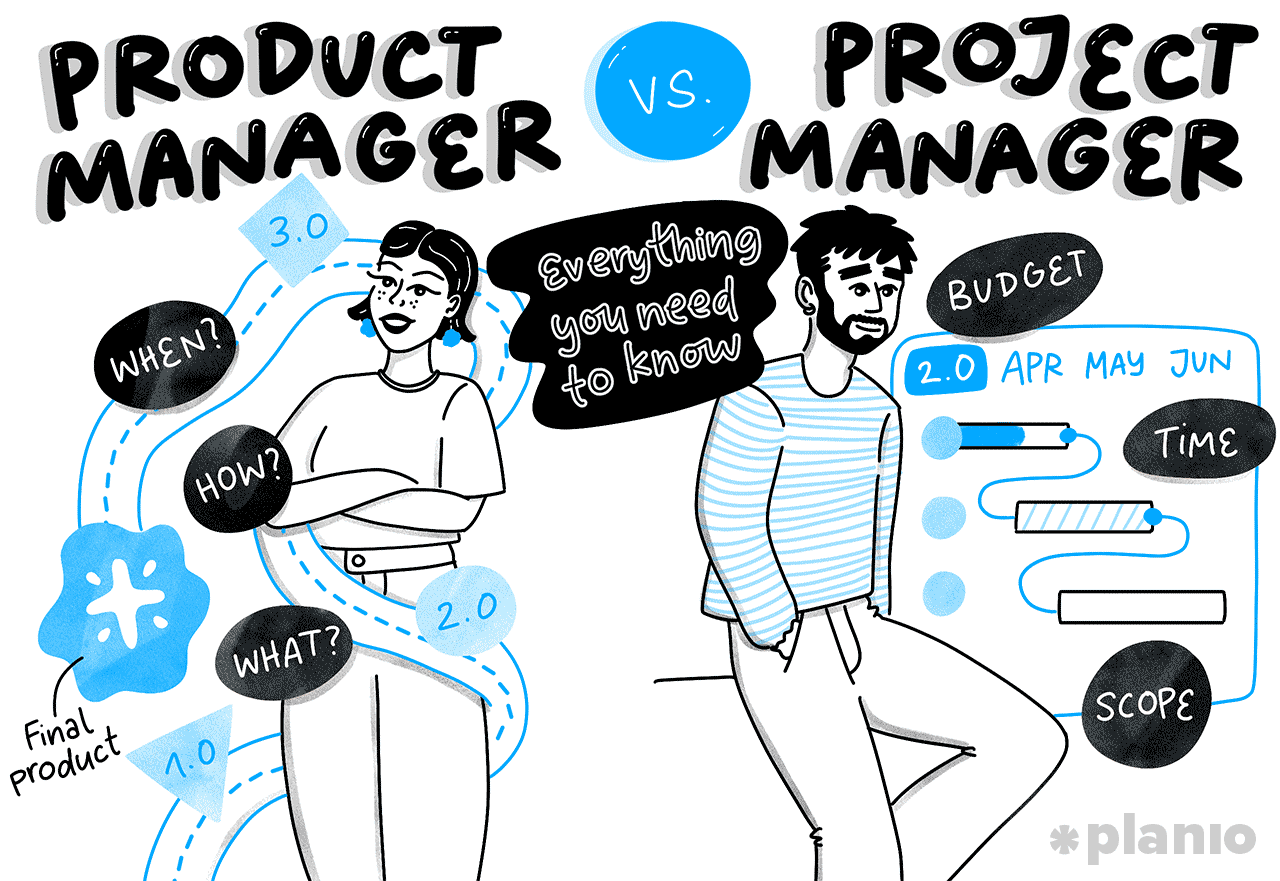
A product manager leads the long-term roadmap of a product. Their goal is to maximize the value of the product, directing the ‘what’, ‘how’, and ‘when’ of new product features that meet the needs of customers.
A project manager leads a temporary endeavor that creates change. Their goal is to deliver a defined output within set constraints (such as time, budget, and scope), handing it over to customers or business teams to use in operations.
Anyone in either of these roles will tell you this is an oversimplification. So in this guide, we’ll dive deep into the similarities, differences, and synergies of both roles to help give you the clarity you need to shape your career or business direction.
Jump to a section:
Products vs. projects: Understanding the difference
Before we can look at the roles, it’s good to understand the work a product or project manager oversees.
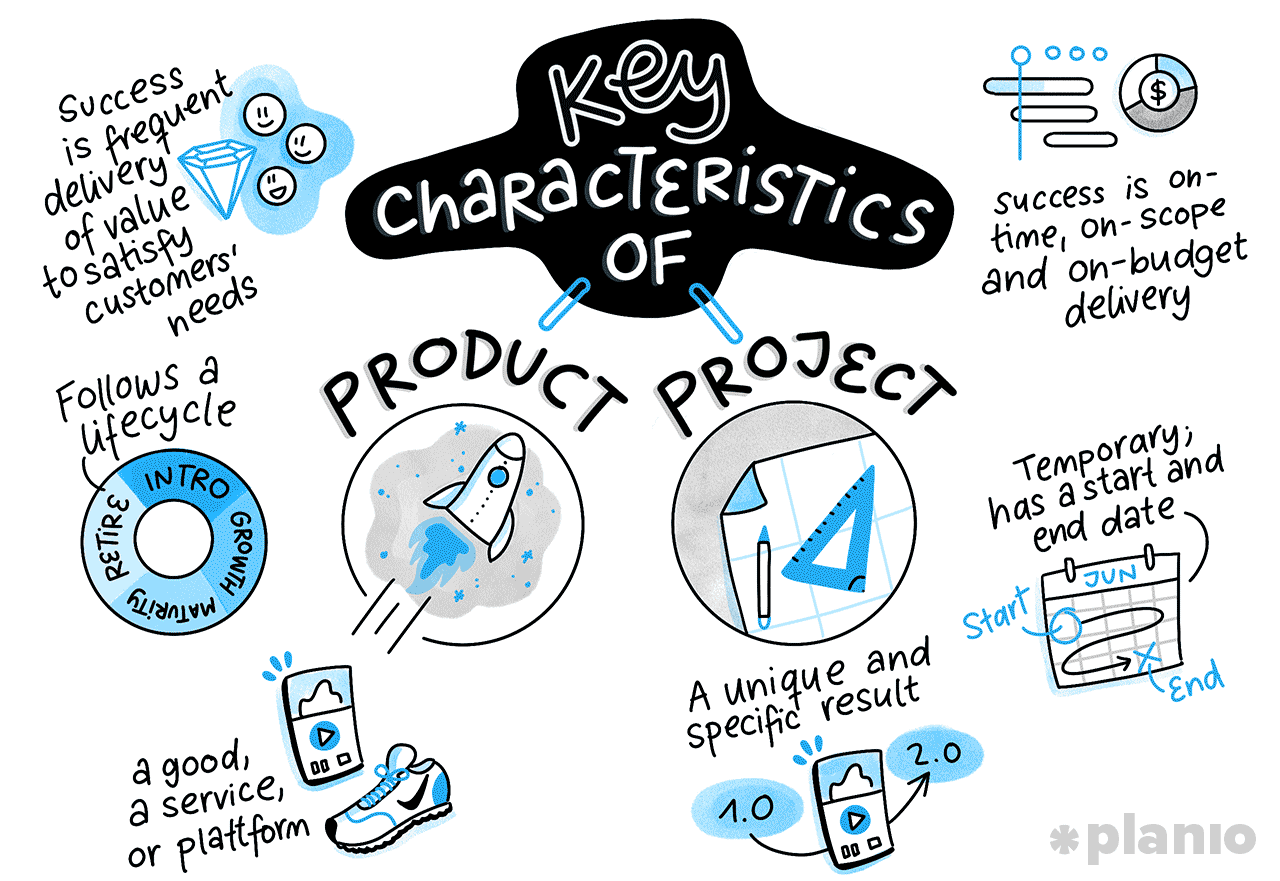
Let’s look at the key characteristics of a product versus a project:
- A product is a good, service, or platform that satisfies customers’ needs. It follows a lifecycle (e.g., introduction, growth, maturity, retirement) but has no definitive “end” date so long as it’s providing value. Think of a technical product such as Microsoft Excel or Spotify, or even a physical product such as a pair of Nike running shoes.
- A project is a temporary endeavor undertaken to create a unique and specific result (e.g., a business change). Projects have defined start and end dates as well as deliverables. Think of the release of “Version 1.0” of an app or the construction of a new office block.
The confusion between product and project management comes from the overlap between the two. Both roles follow delivery lifecycles, oversee teams of resources, navigate timelines and budgets, and have specific targets and deliverables.
However, there are three main characteristics that differentiate projects from products:
| Products | Projects | |
|---|---|---|
| Timeline | None | Defined start and end date |
| Team structure | “Long-lived” with team members that become experts in the product | Temporary and often composed of matrix structures |
| Success | Value-focused, tracking metrics such as customer adoption, revenue growth, and retention | Defined by being on time, under budget, and within the predetermined scope |
Even with the similarities and differences mapped out, it can still be difficult to fully separate the product and project manager roles. Ultimately, both roles are all about delivering ‘change’, which requires a certain mix of technical and non-technical skills.
Product managers vs. project managers: Roles, responsibilities, and skills
Now that we know how products and projects differ fundamentally, let’s apply that to each specific role and highlight their key points of difference in responsibilities, skills, and success metrics:
| Product Manager | Project Manager | |
|---|---|---|
| Role | See them as the "CEO" of the product | See them as the "COO" of the delivery |
| Main questions | What problem are we solving? Are we building the right thing? Are customers happy? | How do we get this done? Are we on track? Are we within time and budget? |
| Main responsibilities | Product strategy, roadmap visioning, customer research, feature prioritization | Project planning, scheduling, resourcing, risk management, scope control |
| Most important skills | Data analysis, strategic thinking, storytelling, customer empathy, communication, and technical knowledge | Organization, communication, negotiation, time management, team management, and risk analysis |
| Focus | Long-term value and market fit | Short-term delivery and effectiveness |
| Success metrics | Revenue, NPS, customer retention, customer engagement | On time, on budget, to scope |
To bring this to life, let’s go a bit deeper and look at how product and project managers differ in their mindsets and daily activities.
Mindset
Product managers: By its nature, product management is a long-term role, so the best product managers need to establish a long-term product vision. Underneath that, on a day-to-day basis, they’re constantly asking, ‘Are we building the right thing?’ to help them stay aligned to that product strategy.
Project managers: On the other hand, project management is most concerned with short- and mid-term execution. With set start and end dates, project managers are more focused on their specific scope, working to get their deliverables live on time and within budget. They’re asking, ‘Are we building it in the right way, at the right speed, for the right cost?’
A day in the life
Product managers: A typical day in the life of a product manager often involves interviewing customers to understand their pain points, analyzing usage data from the last release, or negotiating with stakeholders about what features make it into the next quarter’s roadmap.
Project managers: A typical day in the life of a project manager typically involves running a daily stand-up or project meeting, updating the project plan with the latest updates, and managing risks, issues, or concerns with the project team or sponsor.
To use an analogy, while a Product Manager gazes at the horizon to see where the ship should go, the Project Manager is looking at the engine room to make sure the ship will get there without running out of fuel.
All businesses need both perspectives, but they are fundamentally different disciplines.
What does a product manager do?
If you’re still unsure of where you fit (or which role you need to hire first), here’s a deeper dive into what a product manager actually does.
Key responsibilities
A product manager’s responsibility list is full of discovery, definition, and direction setting, specifically:
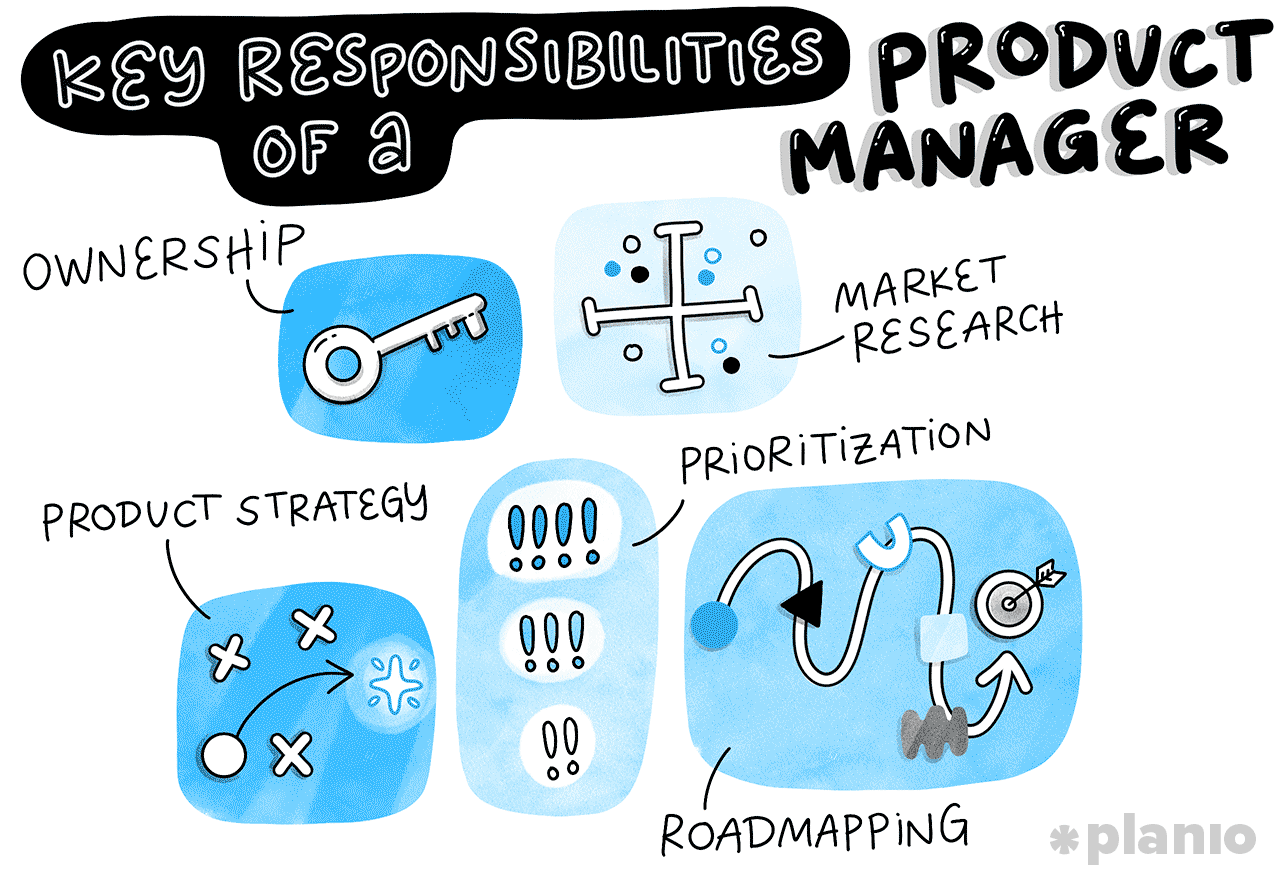
- Ownership: Responsible for the success of a product over its entire lifecycle.
- Market research: Understanding user needs, competitors, and market trends.
- Product strategy: Defining the vision and the "Why".
- Prioritization: The hardest part of the job — deciding what not to build.
- Roadmapping: Planning out the high-level timeline of features and releases
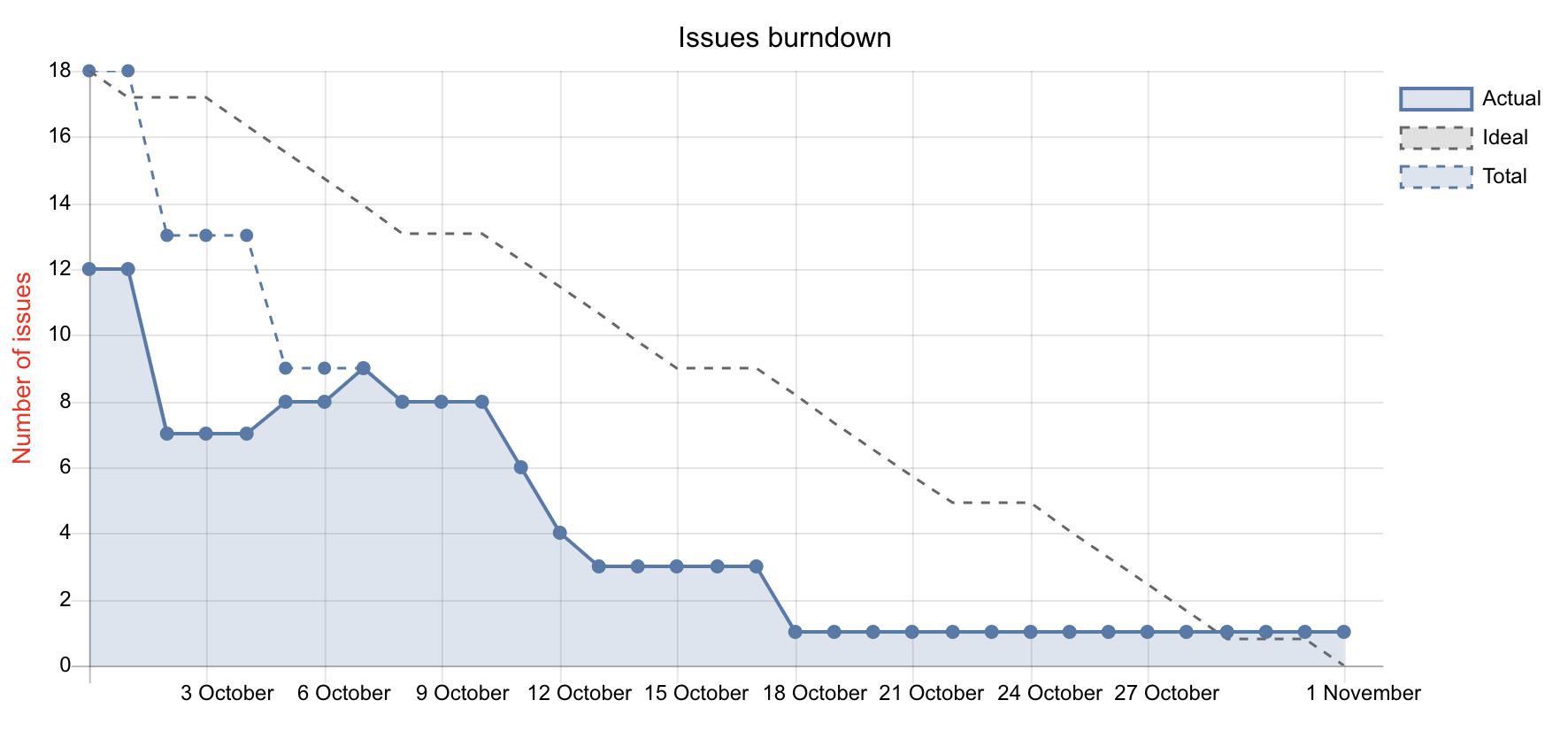
For product managers, Planio is a great tool for building long-term roadmaps and team structures that enable awesome products. While it’s easy to create tasks, actions, and plans, for Product Managers, the power of Planio is the ability to track your team’s effectiveness over time, allowing you to become a fluid product delivery machine.
Skills required
The best product managers have a mix of technical hard skills and soft skills, including:
- Hard skills: Data analytics (SQL, Google Analytics), A/B testing methodologies, technical fluency (you don’t need to code, but you need to speak “developer”).
- Soft skills: Extreme empathy (for the user), influence without authority (getting teams to follow your vision), communication, and storytelling.
Who hires them?
You can see product managers in any business, but sometimes under different titles. The most common product manager roles are found in software companies (SaaS), consumer goods, and increasingly in non-tech enterprises undergoing “digital transformation”.
Top 3 challenges for product managers
According to the 2024 State of Product Management Report, the landscape is getting tougher for product managers.
Here are some of the biggest challenges of the role:
- Alignment. Getting stakeholders (e.g., sales, marketing, engineering) to agree on a single direction is cited as a top struggle. This means a lot of time negotiating and less time to focus on feature quality.
- Resource constraints. Like every business, stakeholders often want to build a Ferrari but only have the budget and people for a Fiat. Product and developer resources are in high competition, so product managers often have to do more with less.
- Proving value. It can take months or years to see if a product strategy paid off and stakeholders aren’t always patient. Balancing quick wins with long-term value is an ongoing battle.
Learn more: You can read more about what it takes to be a product manager in our guide to product ownership.
What does a project manager do?
For project managers, the responsibilities, skills, and challenges are different. Here’s a closer look.
Key responsibilities
The project management role is all about the delivery and control of a specific scope of work within defined constraints. This includes:
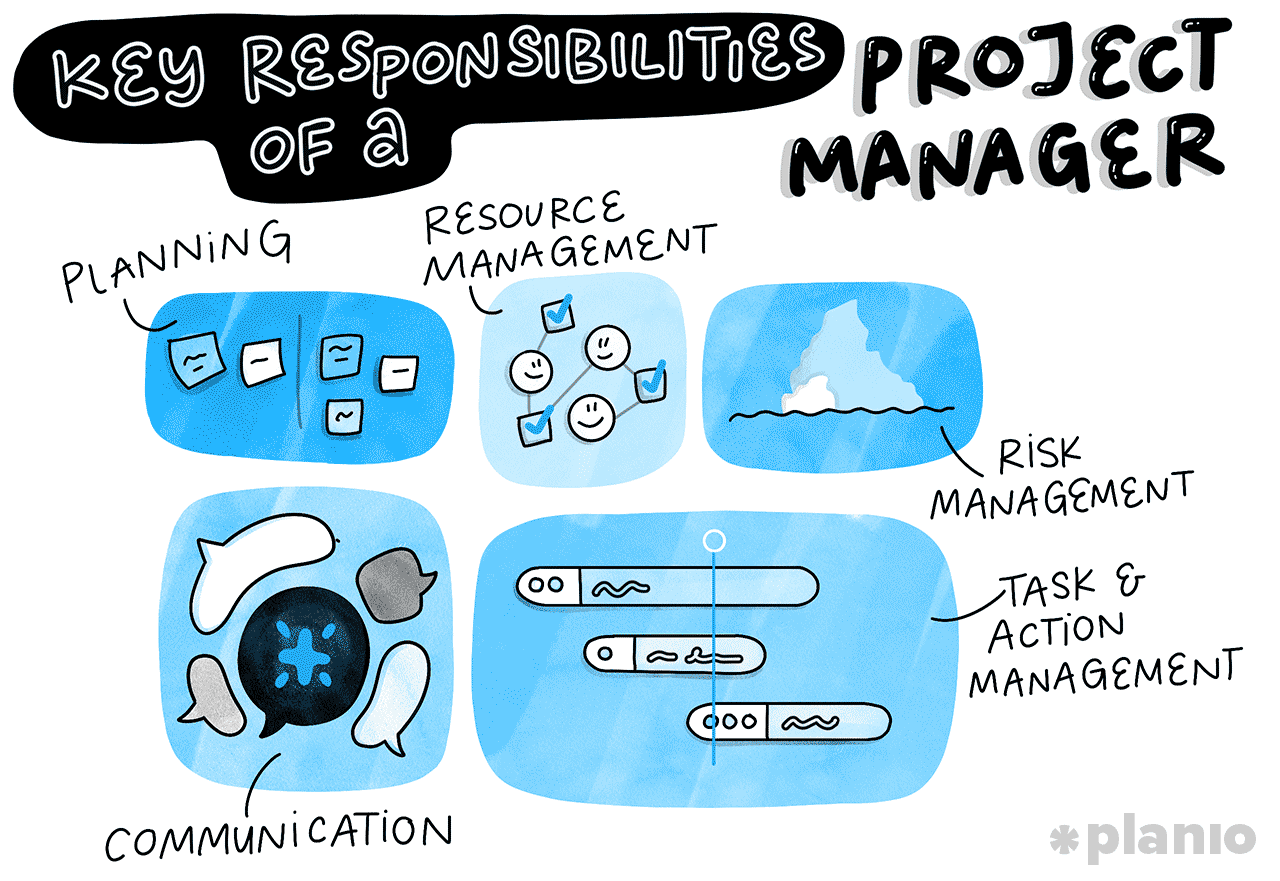
- Planning: Breaking down a huge goal into actionable plans and milestones.
- Resource management: Ensuring the team isn’t overworked and that the right people are working on the right tasks.
- Risk management: Spotting icebergs before the ship hits them.
- Communication: Acting as the central nervous system of the project, ensuring everyone knows their status.
- Task and action management: Keeping everyone on track with their tasks and outstanding actions.
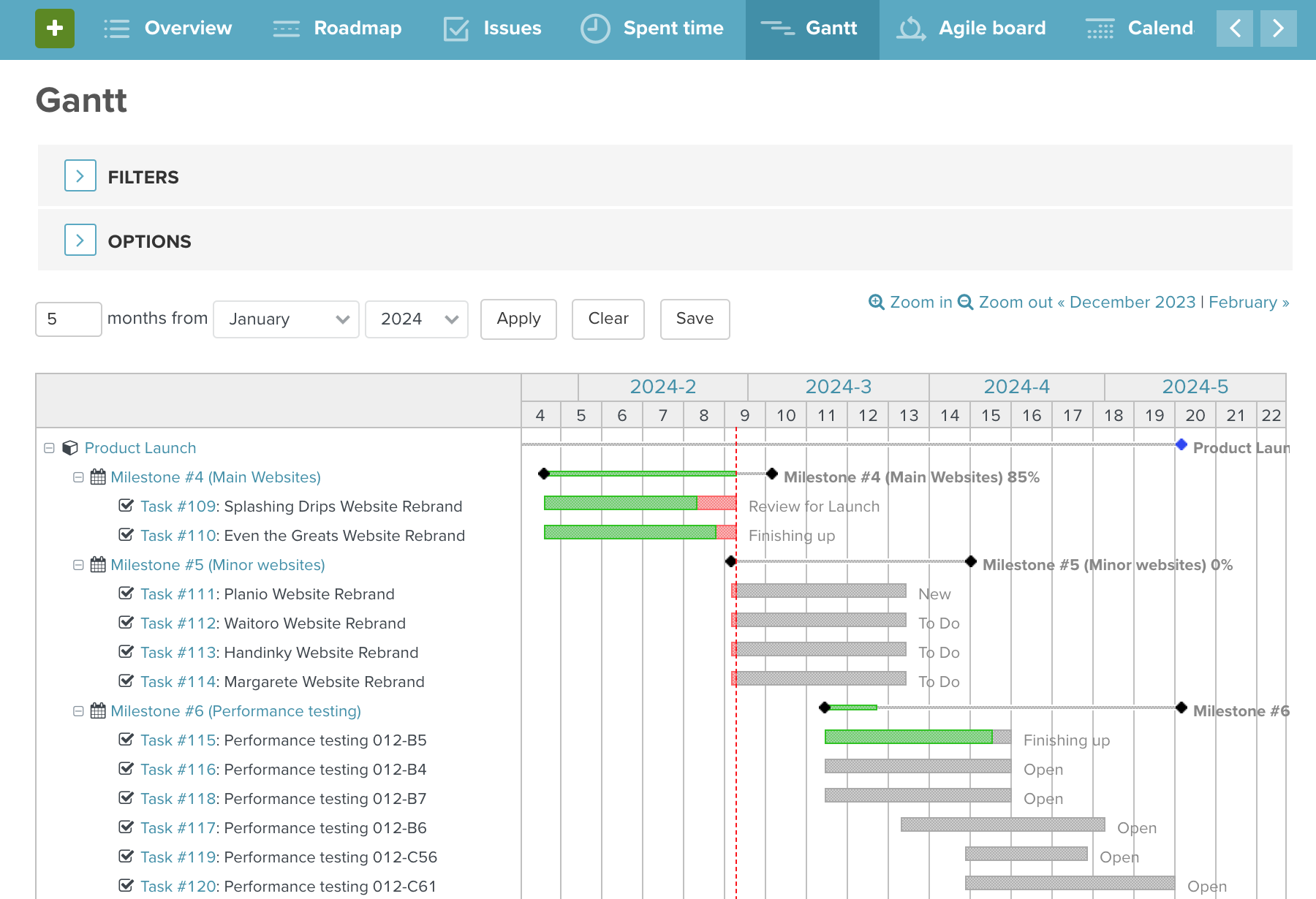
Planio is a great tool for project teams that need to quickly plan, collaborate, and track their project from start to finish. With features for task and issue management, collaboration, document management, and risk management, Planio is perfect for keeping everyone on the same page, even when things get tough!
Skills required
Like product managers, project managers need a mix of hard and soft skills, such as:
- Hard skills: Methodologies (Agile, waterfall, scrum), budgeting, scheduling software, risk analysis.
- Soft skills: Organization, leadership, communication, conflict resolution, negotiation, and staying calm under pressure.
Who hires them?
Project managers are found in pretty much all companies, including construction firms, marketing agencies, software development houses, healthcare organizations, and government bodies.
Top 3 challenges for project managers
Recent data from the Project Management Institute (PMI) highlights that the project manager role is evolving to become more focused on business acumen alongside core delivery.
Key challenges project managers face include:
- Stakeholder engagement. Getting stakeholders engaged and committed in projects is increasingly difficult within a busy remote-working environment.
- Timelines and resources. Like product managers, project managers are fighting for resources, with delays in resource allocation causing timeline delays and projects to slip behind.
- Strategy and vision alignment. Whereas products are focused on vision, projects often find it difficult to fully align themselves with company goals. This creates further disengagement and risks them being stopped while in full flow.
Learn more: Dive deeper into the specifics of project management with our guide to being a project manager.
If you try to make one person both a project and product manager, especially at scale, you’ll build bad products.
How product and project managers work together
We’ve spent a lot of time differentiating the product and project manager roles, but we don’t want you to think they are enemies.
At most high-performing organizations, product and project managers are a dynamic duo that help ensure each other’s success.
Here are two common scenarios where they join forces:
1. The “MVP” launch
When a new product comes into being, it typically starts life as a project.
After all, projects are designed to create something new and unique. Then, once they’ve been established, it’s common for the deliverable (the product) to be handed over to a product manager to own and optimize into the future.
Example:
Imagine a fictional SaaS company, DocuFast, that wants to launch a mobile version of their popular web application.
To achieve this, they spin up a project with a budget of $100,000 and a deadline to launch the first version by Q3. They bring in a project manager to define, build, and launch, working within the constraints.
Once launched, the app is handed over to a product manager who uses initial user data to define the long-term roadmap.
2. Large roadmap delivery
While established products will have a roadmap of small and medium features, sometimes a large overhaul, upgrade, or re-platforming may be needed.
If it’s large enough, the product manager might bring on a project manager to oversee the work, often working in an Agile project management style to hit a tight deadline or work within a defined budget.
Example:
After two years of operation, DocuFast has an established, high-performing mobile app. But, out of the blue, their main server provider notifies them they are going out of business, and DocuFast must urgently re-platform to a new provider.
Given this is a high-paced, time-bound piece of work, the product manager gets a project manager in to oversee the re-platforming, ensuring it’s delivered on time and to budget.
If you’re running both project- and product-based teams and want to build greater synergies, the PMI’s ‘Dual Engines of Success’ guide is a great resource packed full of useful tips for aligning teams together to maximize success.
At a certain level of growth as an organization, it’s important to split the two roles of project and product manager apart.
The bottom line: Choose the right role for your team’s needs
While it’s easy to get lost in the crossover, product and project management are different disciplines requiring slightly different skill sets, focus, and mindsets.
If you try to make one person do both (especially as you scale), you’ll build bad products, miss key deadlines, or worse, burn them out. However, we know that not every company has the budget for two dedicated salaries, so if you had to choose, here’s what we’d base it on:
- Hire a product manager if… You’re running a large product that needs to ship quickly, or you’re struggling to get focus and connection with your customer.
- Hire a project manager if... You know exactly what needs to be built, but your team is chaotic, struggling to hit deadlines, or you’re tight on cash.
Whichever role you need, Planio helps teams of all sizes start organized. Whether it’s a product manager who’s building a backlog of ideas or project managers tracking time and tasks, Planio provides the structure for you to plan, track, test, and launch awesome deliverables.
Try Planio with your own team — free for 30 days (no credit card required!)