Jory MacKay on January 07, 2026
 10 virtual team-building exercises remote teams will actually enjoy
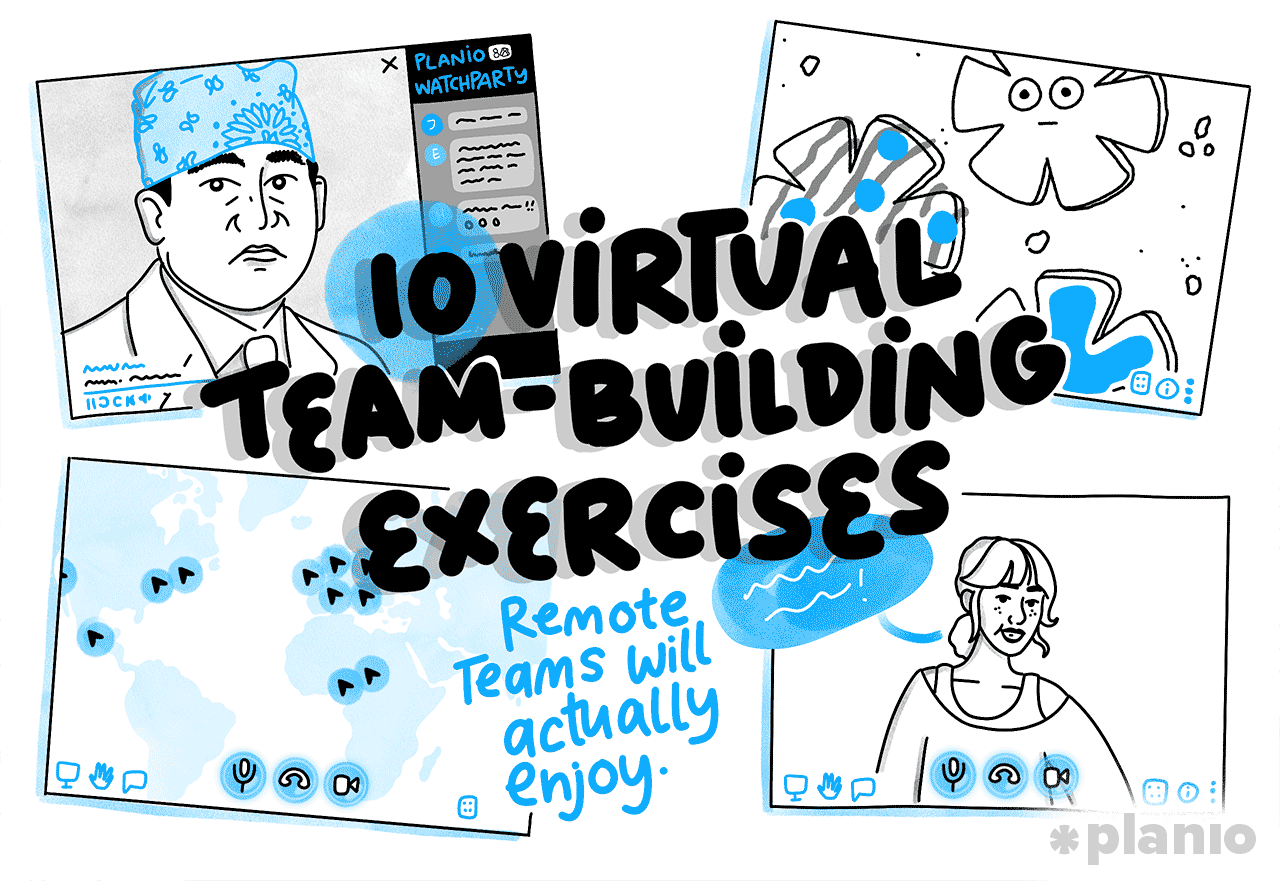
If you’re a manager, you know that personal connection is the glue that holds teams together — but that it’s also not always easy to create, especially on remote teams.
Research shows that workplace belonging leads to a 56% increase in job performance and a 50% reduction in turnover risk.
Unfortunately, most of us have had to deal with sitting through awkward icebreakers, “fun Fridays,” and other cringe-worthy exercises that were designed to build team connection, but just don’t work in a virtual environment.
Luckily, all is not lost for virtual team building. You can still create team connections, even when working remotely. It just requires a dedicated approach that’s tailored to the team, your objectives, and the remote environment.
Jump to a section:
Why virtual team-building exercises still matter
Virtual team-building exercises are structured activities and games conducted online to help remote team members connect on a personal level.
While they’re a crucial tool for building a strong, cohesive team culture across different locations and time zones, they’re also about having fun and giving people a short respite from the pressures of their daily workload.
When we invest in building strong connections, something powerful happens: we create psychological safety.
This is the shared belief that the team is safe, can take risks, and feel accepted and respected for who they are.
Teams with this foundation receive a range of benefits, including increases to:
- Collaboration and communication. When we know our colleagues as people, we’re more likely to communicate openly and collaborate effectively.
- Empathy and trust. Sharing experiences helps us understand each other’s perspectives and builds a foundation of trust that’s essential for teamwork.
- Engagement and morale. Feeling connected to a team boosts job satisfaction and motivation, leading to higher morale and engagement.
- Innovation. A psychologically safe environment encourages team members to share new ideas without fear of judgment.
- Problem-solving skills. Many team-building exercises are based on collaborative problem-solving, which hones skills that are directly transferable to even the most complex workplace problems.
Fostering a positive company culture also helps to reduce turnover, as employees who feel a strong sense of belonging are more likely to stay with a company long-term.
Investing in team-building sends a clear message that the company values its people and their relationships. Feeling connected to culture is also a key part of turbocharging through the stages of team development, as connections build and conflicts reduce much faster.
How to design an effective team-building exercise
A great team-building exercise doesn’t just happen; it requires a deep knowledge of your team, thoughtful planning, and clear goals and objectives.
Let’s walk through the key steps you should take to design meaningful virtual team-building activities.
To really bring it to life, we’ll tell the story through “Sarah”, a fictional manager who’s organizing some activities for her virtual “Dev Dinos” team:
1. Understand your team’s personalities
Sarah knows her team is mostly introverts who are highly analytical and enjoy a good puzzle. A loud, high-energy “virtual party” might not be the best fit.
A great team-building exercise doesn’t just happen; it requires a deep knowledge of your team, thoughtful planning, and clear goals and objectives.
2. Get team-wide buy-in
Instead of just dropping an event into the calendar, Sarah discusses the idea for virtual team building with the team. She uses a poll to get feedback on a few ideas — a virtual escape room, a collaborative coding challenge, or a team quiz — getting the team engaged right from the start.
3. Introduce the topic of Psychological safety
Before the activity, Sarah emphasizes that the goal is to simply connect and have some fun. There’s no pressure to be the "best". Instead, it’s a judgment-free zone for participating at your own level.
4. Match activities to personal circumstances
The Dev Dinos are spread across different time zones. Sarah schedules the activity for a time that works for everyone, ensuring it’s during paid work hours. She also checks if anyone has accessibility needs or other commitments.
5. Encourage creativity
Technical teams like the Dev Dinos spend their days working with logic and code. Sarah chooses the virtual escape room because it allows them to flex their problem-solving skills in a fun, creative, and collaborative way — a different part of their brain than they usually use.
6. Plan the activity properly
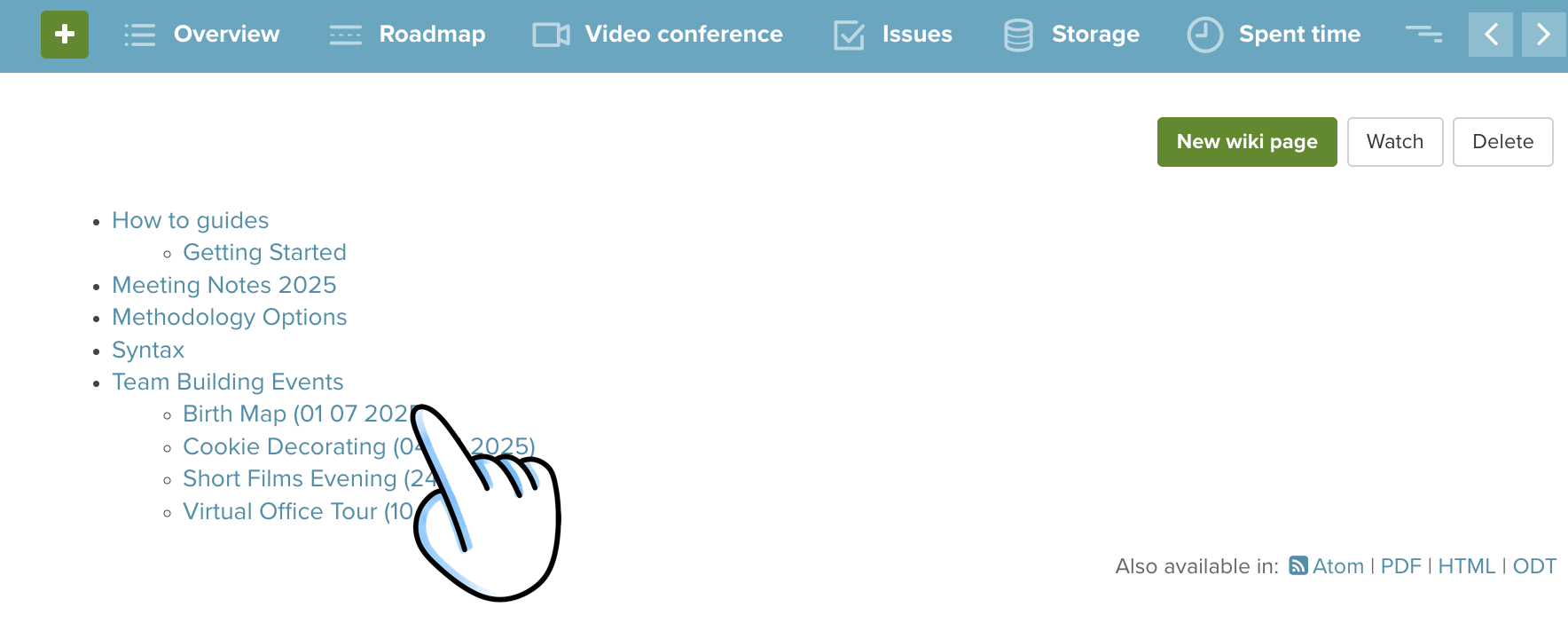
A good event needs good organization. Sarah creates a project in Planio to manage the activity. She creates a task list, assigns a team member to send the calendar invite with the link, and creates a wiki page with all the details so everyone knows what to expect.
7. Bring the energy and enthusiasm
As the facilitator, Sarah’s energy will set the tone. She starts the call with a warm welcome and genuine enthusiasm, and impersonates the escape room’s characters. This helps everyone relax, have a laugh, and get into the spirit of the activity.
8. Reflect and incorporate feedback
After the escape room, Sarah sends out a quick, anonymous survey to see what the team enjoyed and what could be improved. She’ll use this feedback to make the next team-building session even better.
The biggest pitfalls of team-building exercises you need to avoid
We’ve all been in a team-building session that missed the mark. Managing remote teams is hard, but you can dramatically increase your chances of team cohesion by steering clear of these common team-building pitfalls.
Let’s look at the most common and how to avoid them:
| Problem | Solution |
|---|---|
| Irrelevant activities that feel childish or patronizing: The goal is to build professional trust and rapport, not to make your team feel like they’re in kindergarten. | Choose activities that respect their intelligence and maturity, or are clearly briefed as lighthearted fun. |
| One-size-fits-all exercises: Your team is made up of diverse individuals with different personalities, interests, and comfort levels. An activity that one person loves, another might dread. | Offering variety from activity-to-activity is key. Put your activities to a vote to get buy-in from the start. |
| Not considering team workloads and schedules: Adding a "mandatory fun" session to an already overstretched team is a recipe for resentment. | Plan activities well in advance and be mindful of project deadlines and stress levels. |
| “Forced fun” with no meaningful benefit: If an activity feels completely disconnected from the team’s actual working relationships, it can feel like a waste of time. | The best exercises have subtle ties back to improving skills such as collaboration or communication, or aim to build trust and connection. |
| Lack of energy and enthusiasm: If the person leading the session seems bored or disengaged, that feeling will quickly spread to the rest of the team. | The facilitator needs to be the event’s biggest champion. As a manager, that may mean delegating the facilitation to someone else, or paying for a professional. |
| No follow-up: A one-off event is unlikely to have a lasting impact. The real magic happens when you develop connections into strong team rituals. | Make sure to embed the outcomes of your event into future work or collaboration. |
| Not listening to the team’s feedback: Miss the mark once and you’ll get forgiveness; miss it repeatedly and your team will become disengaged. If you don’t ask for feedback, you’ll never know, and you risk repeating the same mistakes. | Ask for honest event feedback, keeping it anonymous if needs be. Don’t take any criticism personally, and instead, use it to build better for next time. |
10 virtual team-building exercises to try today
Now that we know all about what virtual team-building exercises are and what makes them great, it’s time to bring it to life with some ideas.
Here are 10 exercises that can help build resilience, psychological safety, and genuine connection within your remote team.
1. Birth map
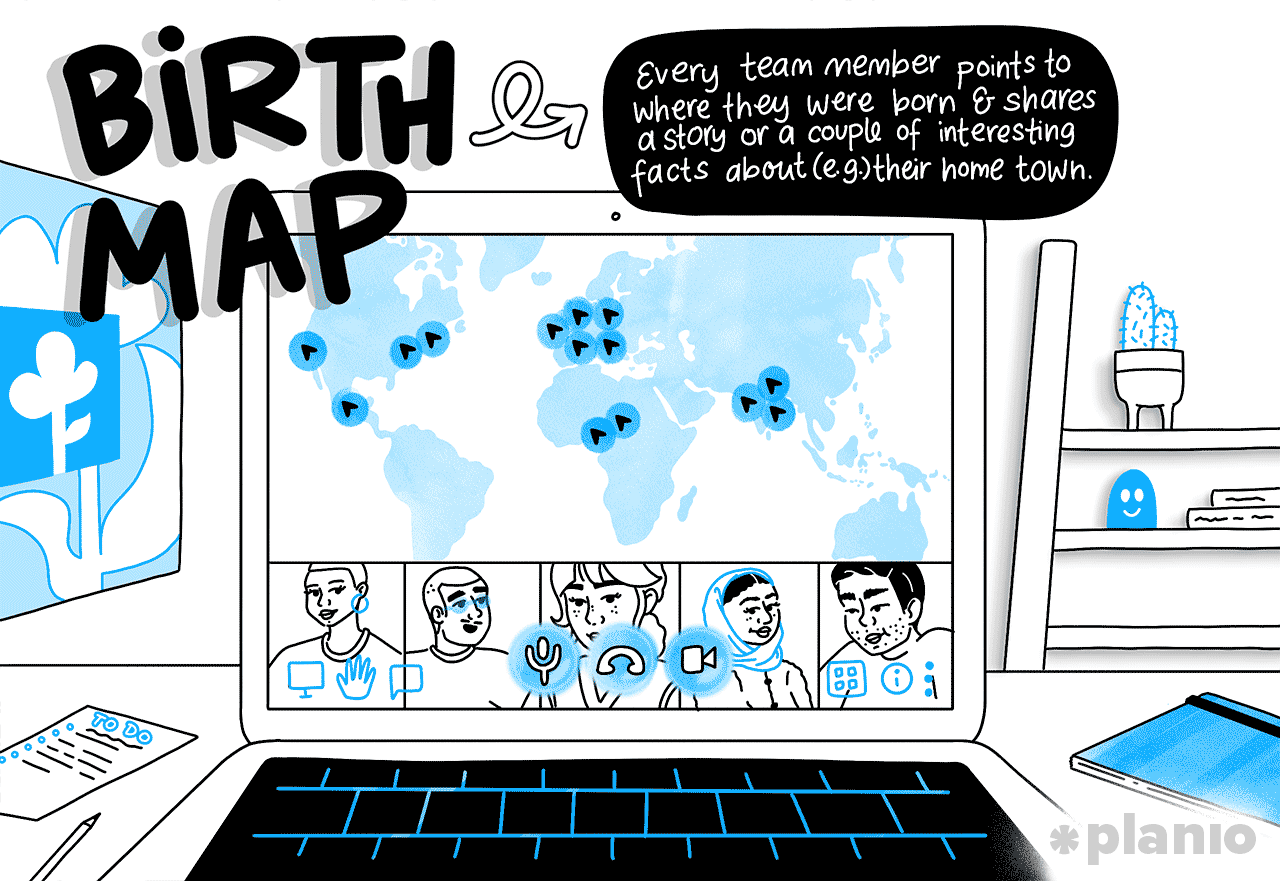
How it works: Each team member shares their screen and points to where they were born on a digital map. They then spend a few minutes sharing a story or a couple of interesting facts about their hometown and how they grew up.
Why it’s effective: This is a simple, low-pressure way to learn about each other’s backgrounds. It fosters empathy and understanding by giving context to who people are outside of work and identifies things team members have in common.
Who it’s best for: New teams, or teams with new hires, as a gentle and personal icebreaker.
2. Virtual office tours
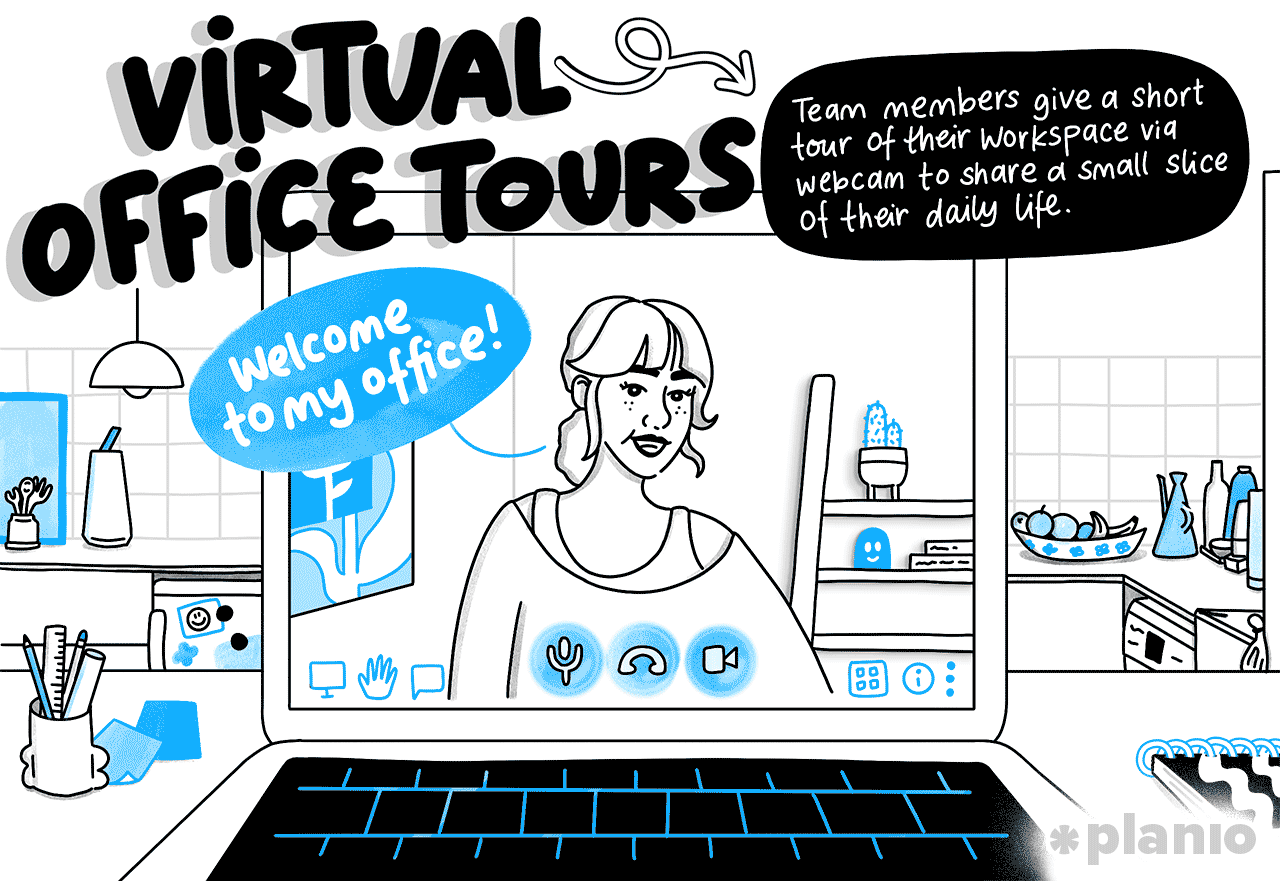
How it works: Team members give a short, 2-3 minute tour of their home office or workspace via webcam. This isn't about having a perfect home; it's about sharing a small slice of their daily life.
Why it’s effective: It helps humanize colleagues by literally showing where they work every day. It often leads to conversations about pets, hobbies, and family, all while creating natural connection points.
Who it’s best for: Small, established teams who are comfortable sharing a bit of their personal space.
3. Arts and crafts
How it works: Send each team member a small arts and crafts kit in the mail (e.g., painting, clay modeling, or jewelry making). Then, get together on a video call to work on the craft together, chat, and share your creations.
Why it’s effective: It’s a relaxing, hands-on activity that doesn’t require intense focus on a screen. It allows for casual conversation to flow naturally while people are busy with their hands, while also calming the team against the stress of everyday life.
Who it’s best for: Teams (especially those with a creative flair) that need a break from technical, screen-based work and want to engage in a low-stakes creative activity.
4. Cookie decoration
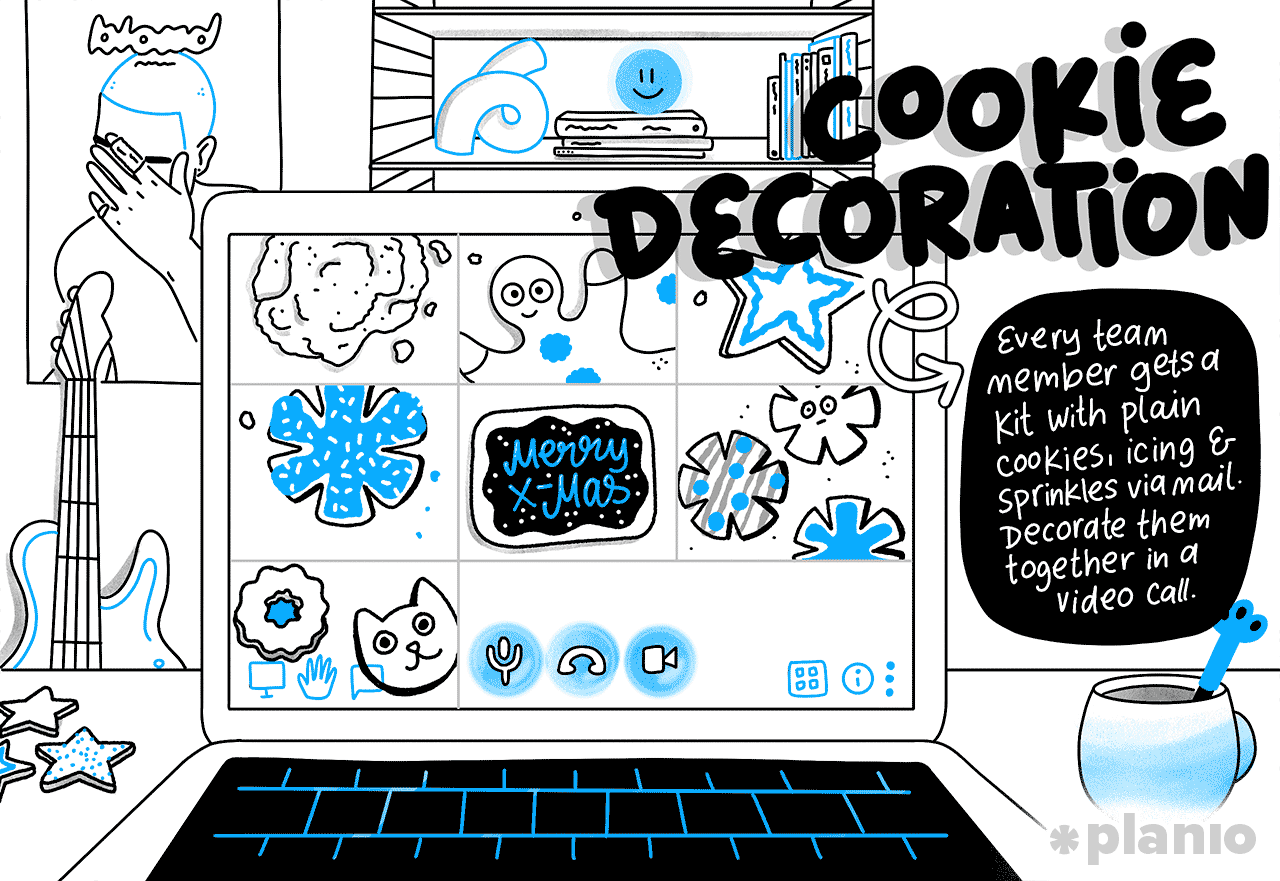
How it works: Similar to arts and crafts, mail a kit with plain cookies, icing, and sprinkles to each team member. Everyone gets on a call to decorate their cookies. You can add a theme for extra fun.
Why it’s effective: It’s a lighthearted and tasty way to spend time together. There’s no pressure to be an artist, and the end result is a delicious treat.
Who it’s best for: Great for celebrating holidays (especially for international teams), project milestones, or just as a fun Friday activity for any team.
5. Virtual escape or puzzle rooms
How it works: Teams work together in a virtual room to solve a series of puzzles and challenges to "escape" within a time limit. Many companies offer hosted online escape room experiences, with a variety of sleuth, scary, or adventure themes.
Why it’s effective: This is a fantastic exercise in communication, collaboration, and problem-solving under pressure — all skills that are directly applicable to work projects.
Who it’s best for: Teams that enjoy puzzles and challenges. It’s particularly good for cross-functional teams who need to practice working together, with a fun, adventurous twist.
6. Virtual scavenger hunts
How it works: The facilitator calls out a series of items (e.g., "something you're proud of," "your favorite mug", "something green", etc.), and team members have to run and find the item in their home and show it on camera.
Why it’s effective: It’s a high-energy, fast-paced game that gets people moving and laughing. It also reveals fun, personal details about each team member through the objects they choose to share.
Who it’s best for: Any team looking for a quick and easy energy boost at the start of a meeting.
7. Wellness or meditation sessions
How it works: Hire a professional to lead the team through a guided meditation, a desk yoga session, or a mindfulness workshop.
Why it’s effective: This shows the company cares about employee wellbeing and helps combat the stress and burnout that can come with remote work. It provides a shared moment of calm and relaxation.
Who it’s best for: Teams that are experiencing high levels of stress or those with a strong interest in health and wellness.
8. Team quiz challenge
How it works: A lockdown favorite! Create a trivia quiz using an online tool. You can use general knowledge questions or create custom rounds about your company, industry, or even inside jokes from the team.
Why it’s effective: This is a classic for a reason. Quizzes encourage friendly competition and teamwork if you play in groups. Customizing the questions makes it more personal and engaging, and you can even focus on development topics to enhance learning.
Who it’s best for: Larger teams, as you can easily break them out into smaller groups to compete.
9. Short movie ‘nights’
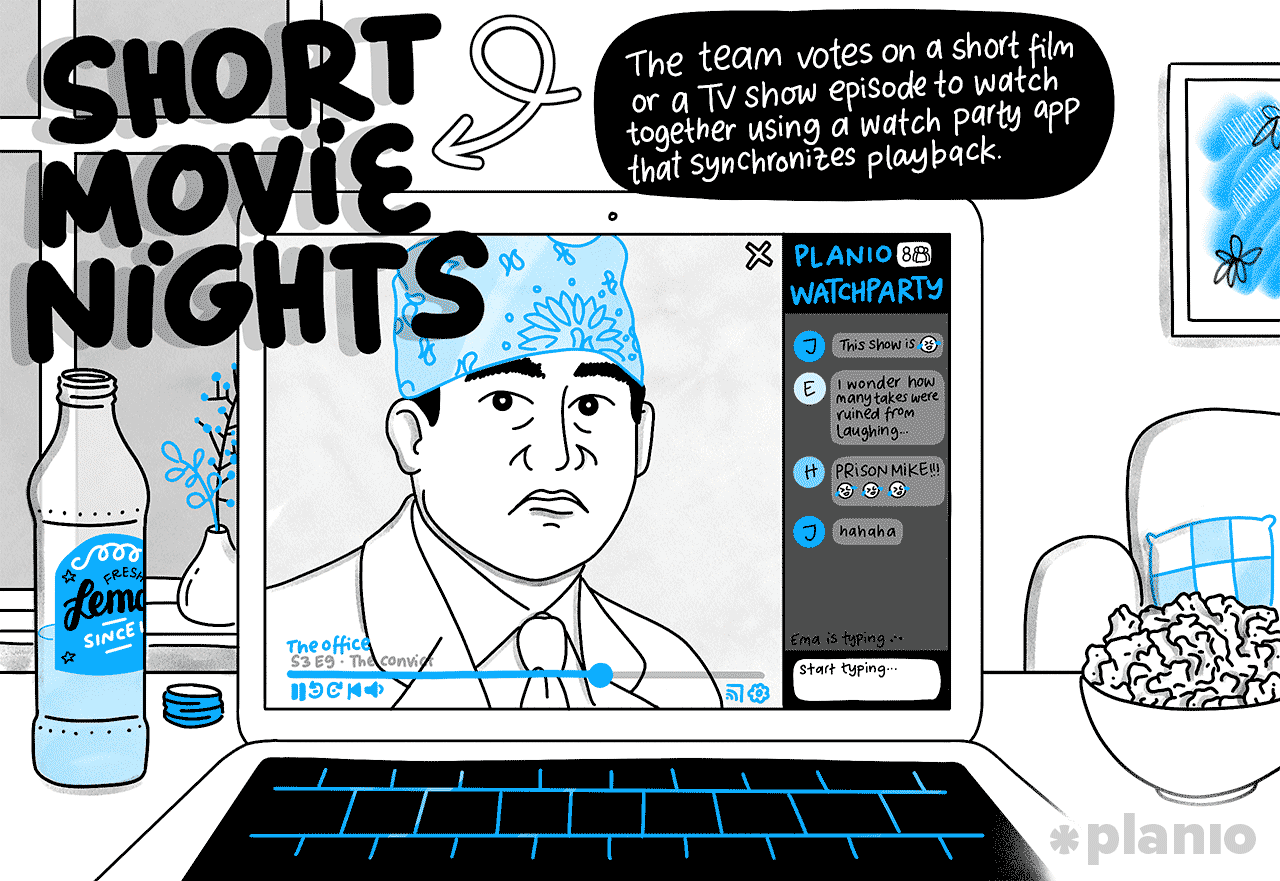
How it works: The team votes on a short film or a TV show episode to watch together using a watch-party app that synchronizes playback.
Why it’s effective: It mimics the shared cultural experience of watching something together, providing common ground for future conversations ("Did you see that scene where...?"). It’s a low-effort way to bond.
Who it’s best for: Teams that want a relaxed, low-interaction social event to wind down at the end of a week (just make sure to do it during the working day!)
10. Virtual murder mystery
How it works: Each team member is assigned a character in a murder mystery plot. They interact, share clues, and work together to figure out who the culprit is. Hosted options are available to make this seamless.
Why it’s effective: This is an immersive experience that encourages creative thinking, communication, and deduction.
Who it’s best for: Outgoing teams that enjoy a bit of drama and role-playing. Excellent for building cross-team relationships.
Top tips to make virtual team-building exercises effective
Having a list of great ideas is one thing; executing them well is another. Here are a few best practices for making your team-building exercises meaningful and impactful.
- Keep sessions short. "Zoom fatigue" is real. It’s better to have a focused and engaging 30-45 minute session than a rambling two-hour one.
- Swap out facilitators. You don’t have to lead every single activity. Encourage other team members to take turns hosting, which gives them a chance to develop leadership and communication skills along the way.
- Mandatory vs. optional. While there are pros and cons to each side, consider whether you should make virtual events mandatory or optional. True connection can’t be forced, but getting the team together has its benefits.
- Balance fun with professional development. The best activities are enjoyable, but also subtly reinforce skills like communication, collaboration, or creative thinking.
- Turn exciting exercises into ongoing rituals. If the team loves a monthly quiz or a weekly scavenger hunt, turn it into a recurring event. Team rituals create a predictable and comforting rhythm of connection.
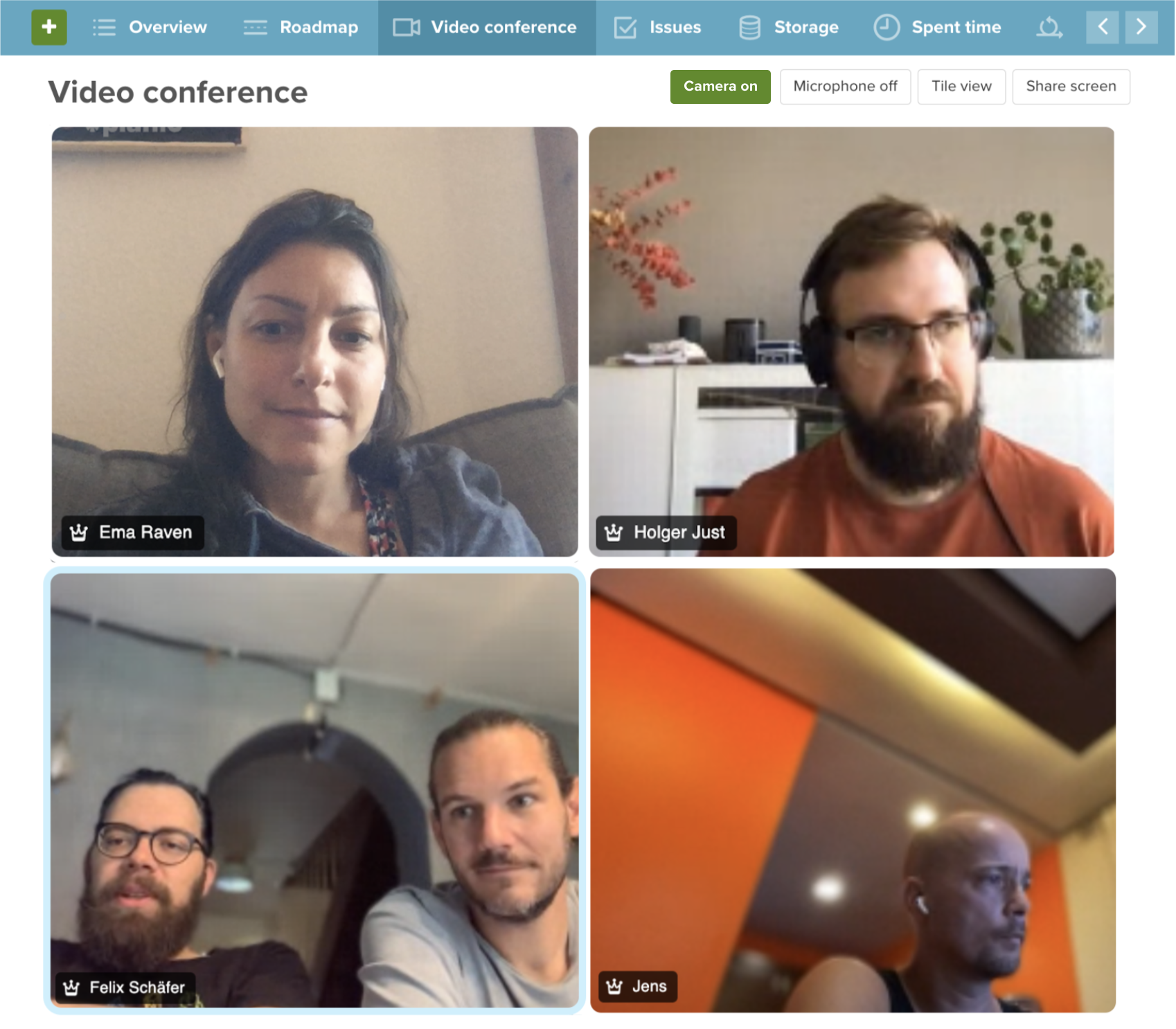
Planio includes a free, built-in video conferencing app, Planio Meet, so you can start quick and secure video calls with your team directly from your project — no need for invites. Just install it and anyone who opens Meet within the project is automatically connected. Planio Meet works on desktop and mobile devices and is fully compatible with Jitsi.
The bottom line: Don’t settle for outdated and cheesy team-building
Remote teams can often feel isolated, but the answer isn’t to force people into awkward virtual happy hours.
Research shows that workplace belonging leads to an increase in job performance and a reduction in turnover risk.
The key to effective virtual team-building isn’t frequency or flashy activities. A mix of thoughtful rituals and creative exercises can build trust and camaraderie without draining productivity or morale.
If you’re a manager looking to schedule your next virtual team event, Planio provides a central hub to help you coordinate activities using tasks, track RSVPs via chat, gather feedback using forums, and build a repository of team-building ideas for the future in our Wiki.
Try Planio with your own team, free for 30 days (no credit card required!)