Jory MacKay on June 10, 2026
 How to define your company’s core values (with examples)
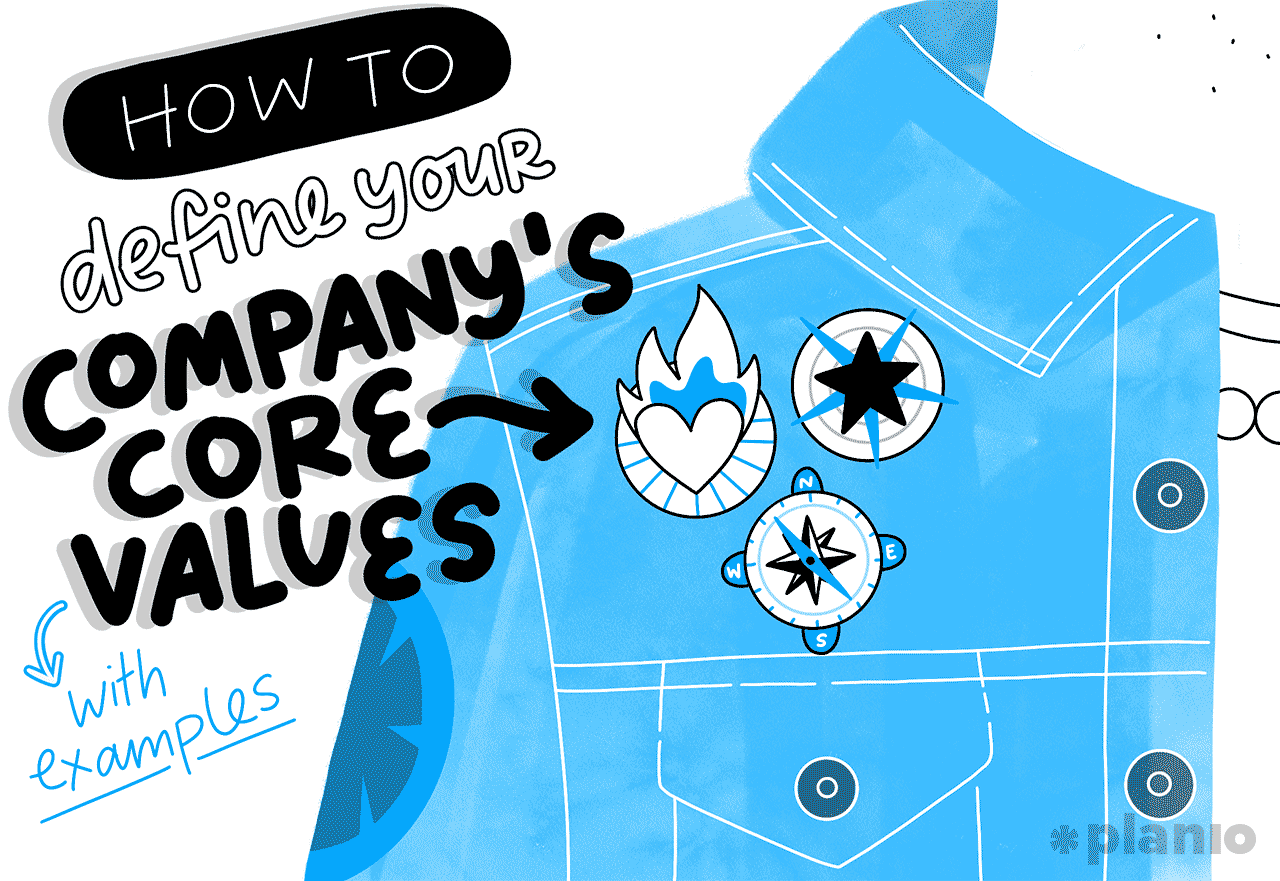
As a founder, CEO, or leader, it’s difficult to sum up your company’s values in just a few words. But ignoring company values, or treating them purely as a PR exercise, is a massive mistake.
Defining and promoting authentic company values has been shown to drive improvements in everything from hiring talented team members to increasing profitability.
Values act as a beacon, attracting the right people to your mission. And when times get tough, teams with strong shared values are better able to stand together and face the oncoming storm.
If you’ve ever turned up your nose at the idea of company values, you’ve missed out on one of the strongest levers available to leaders. In this guide, we’ll help you uncover and articulate a set of authentic values that you can use to align your entire organization.
Jump to a section:
What are company values?
Company values are the fundamental beliefs and guiding principles that dictate behavior, actions, and decision-making within an organization.
Your company’s core values help define your culture, and in turn, drive trust, psychological safety, and engagement. They act as a north star for everyone, helping teams understand what’s right, what’s wrong, and how they should treat both customers and fellow teammates.
It’s crucial to differentiate company values from your personal values. While a founder’s personal values heavily influence the company, they’re not the same thing.
Personal values determine how you act outside the workplace. For example, volunteering at a food bank because you care about people struggling to afford healthy food.
Company values, however, apply to how you want people to act inside the workplace, guiding the collective conduct of your employees.
Here’s a great example. Planio began its life as an internal tool we built for clients of our development and design firm, Launch.
When clients kept asking to continue using Planio after we’d finished our project, we had two choices: go raise money and try to grow Planio into a massive company, or put all of our energy into efficiently and effectively helping the customers that helped us at the start (and the new ones we picked up along the way).
We decided on the latter. Not because we hate money. But because, as a company we believe in core values of empathy, helpfulness, and sustainability. We decided that it was more important to favor long-term stability and customer happiness over reckless growth.
These aren’t just words — they dictate how we build our software and support our employees and users every single day.
It’s crucial to differentiate company values from your personal values. While a founder’s personal values heavily influence the company, they’re not the same thing.
10 major benefits of strong company values
There’s one main problem with company values: too often, they’re inauthentic and vague, filled with meaningless buzzwords designed to attract investors, not motivate employees.
When your stated beliefs and your daily actions are inconsistent, it creates company-wide distrust and inconsistency.
For example, if you say “we move fast,” but every decision requires four layers of management approval, your team won’t buy into your values.
On the other hand, strong and authentic company values provide structure, meaning, and clarity even in the hardest moments of crisis. They give you a platform for leading by example, ensuring that everyone is accountable while building trust across the team.
Here’s a breakdown of the main benefits of embracing a value-led company culture:
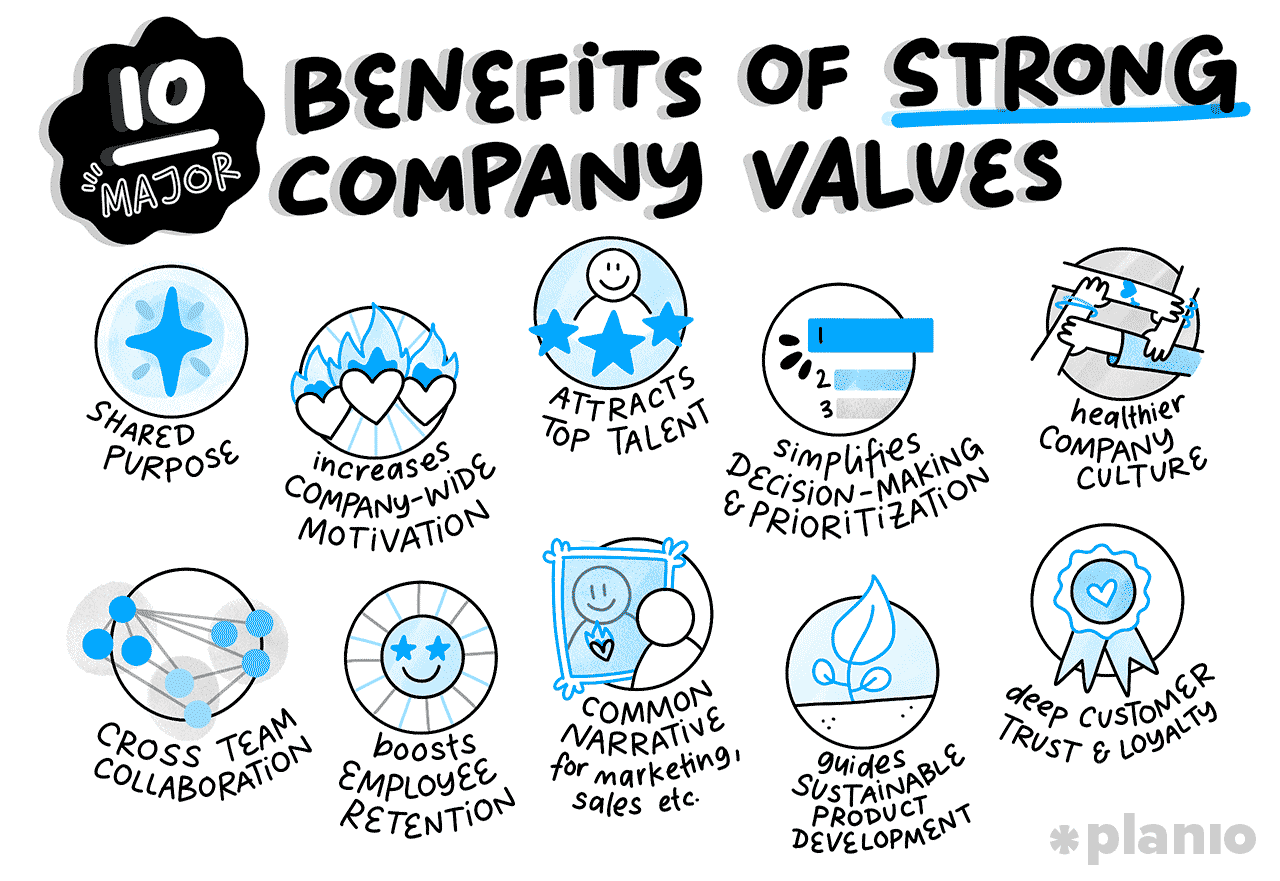
- Provides a shared purpose and common goal. Everyone knows exactly what they’re working towards, which creates a stronger team bond and a shared sense of ownership.
- Increases company-wide motivation. Meaningful work drives harder, smarter effort. This leads to boosts in productivity, helping you stay ahead of your competition.
- Attracts top talent (and keeps them committed). The best people want to work for companies that align with their worldviews, passions, and morals. Clearly articulated values attract the right people for your company.
- Simplifies decision-making and prioritization. When faced with a tough choice, your values act as the ultimate tie-breaker, helping to guide the path towards the best outcome.
- Supports a healthier company culture. Toxicity struggles when bad behavior stands out against clear, publicly stated rules.
- Empowers cross-team collaboration. Shared values break down silos by giving different departments a common language. This boosts collaboration and productivity while further cementing great culture.
- Boosts employee engagement and retention. People stick around when they feel connected to a company’s core mission. This reduces recruitment fees, but also enhances shared knowledge and experience.
- Creates a common narrative for marketing, sales, and leadership. Values help ensure your external brand matches your internal reality. Much like attracting the right employees, this helps attract the right customers too.
- Guides sustainable product development. Values keep you from building features nobody needs. In turn, this creates deeper customer value and increases revenues.
- Builds deep customer trust and loyalty. Buyers increasingly spend their money with brands that act ethically and transparently. This is great for your PR and branding and boosts customer retention.
How to choose authentic and effective company values
Now that you know what company values are and why they’re so important, it’s time to get tactical.
“I’ve learned that the best companies — the ones that are most competitive and lead their industries decade after decade — put enormous emphasis on their core values and beliefs.” — Harvard Business School Professor Robert Simons.
Here are step-by-step tips to help you define your own company values that reflect your reality and bring about the most positive outcomes for your team.
Defining and promoting AUTHENTIC company values has been shown to drive improvements in everything from hiring talented team members to increasing profitability.
Lean into what makes you unique
There’s nothing worse than trying to copy the values of a massive tech giant or popular consumer brand. Instead, find what makes your company unique and use that to guide your core values. Your quirks, your founding story, and the background of your people are often your greatest strengths.
- Ask your people: Survey your longest-tenured employees and ask them, “What’s the one unspoken rule that makes us successful?” or “What do you think makes our company unique?”
- Study what you do: Review past project post-mortems to identify the behaviors that saved the day during tough deadlines.
Take inspiration
While you would rather not copy any big names, it’s ok to take inspiration from the right companies. There are many organizations, both large and small, with some great company values that guide how their employees and customers feel about them.
- Audit your heroes: Read up on the core values of companies you respect. What do they define as their guiding principles? How did they get there?
- Steal and remix: Pull together ideas from different companies and industries into a mood board or word cloud. This will help you narrow down on the core values that matter most to you.
Keep your core values clear and concise
As you draft your values, remember this: If your team can’t quickly remember them, they won’t use them. Avoid paragraphs of corporate jargon and buzzwords, and instead, distill your beliefs down to short, memorable phrases that immediately evoke a specific mindset or action.
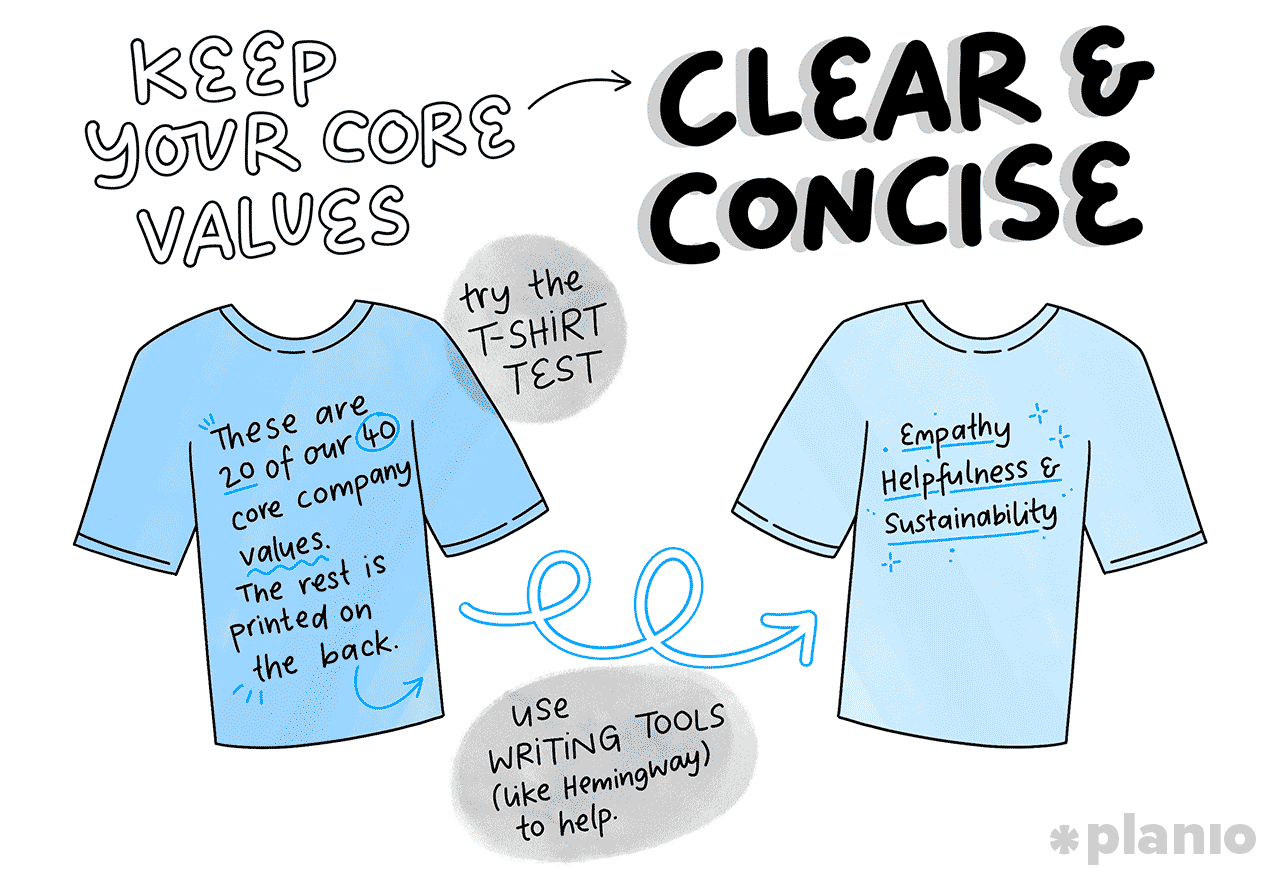
- Try the t-shirt test: If the value is too long or complex to fit legibly on a company t-shirt, shorten it.
- Use writing tools to help: In the modern-day world, there are tools there to help you draft values that your teams will love. Run your drafted values through a readability tool like Hemingway App to strip out complex vocabulary.
Use specific, action-oriented values
Nouns like “integrity” or “excellence” are passive and open to interpretation. Instead, use verbs and action phrases. For example, “Do the right thing, even when it hurts” gives your team a clear behavioral directive compared to just saying “Integrity.”
- Head back to the classroom: Dig out those old English language textbooks and transform all your drafted nouns into active verbs. For example, turn “Strength” into “We strengthen our bonds in tough times!”
- Bring your values to life: To help you bring each of your drafted values to life, craft a one-sentence scenario that explains exactly what it looks like in practice. For example, from the above, “When faced with difficult challenges, we combine each of our strengths to create a team of superheroes.”
Tie values to your mission and vision
Your values shouldn’t live in a vacuum. Instead, they have to align with your organization’s broader narrative, mission, vision, and strategy. Teams get lost without a bridge that connects their daily values and long-term vision, so take the time to ensure everything works together.
Practice strategic planning: The best time to define your company values is during strategic planning. This ensures your vision, mission, values, and strategy all align, giving you and your employees a ‘golden thread’ through the organization.
Align objectives too: While they often sit underneath values, map each value directly to a specific company objective. This ensures the tactical work your teams do every day (the what) is clearly aligned to the values (the how).
Get employee feedback and buy-in
Values dictated from the top down rarely stick. You need your team's fingerprints on the final product. Host workshops or send out anonymous surveys to see if the leadership's view of the culture matches the reality on the ground.
- Ensure your team has psychological safety: When asking for feedback, it’s important to make sure people feel comfortable sharing their thoughts. Work to include a broad range of voices so that you get valuable feedback, and not just nods and “yes.”
- Use a tool like Planio: Planio’s Wiki and Forums are the perfect place to draft and gain feedback on your company values. It keeps everything in one place that can easily be found and referenced by your entire team.
Launch and reinforce values with regular communications
You can treat the “launch” of your company values almost the same as a product launch campaign. Rather than a “one-and-done” email blast, you’ll want to continually weave your values into the fabric of your daily operations. Mention them in weekly wrap-ups, all-hands meetings, and internal newsletters, keeping them top of mind for new and old employees alike.
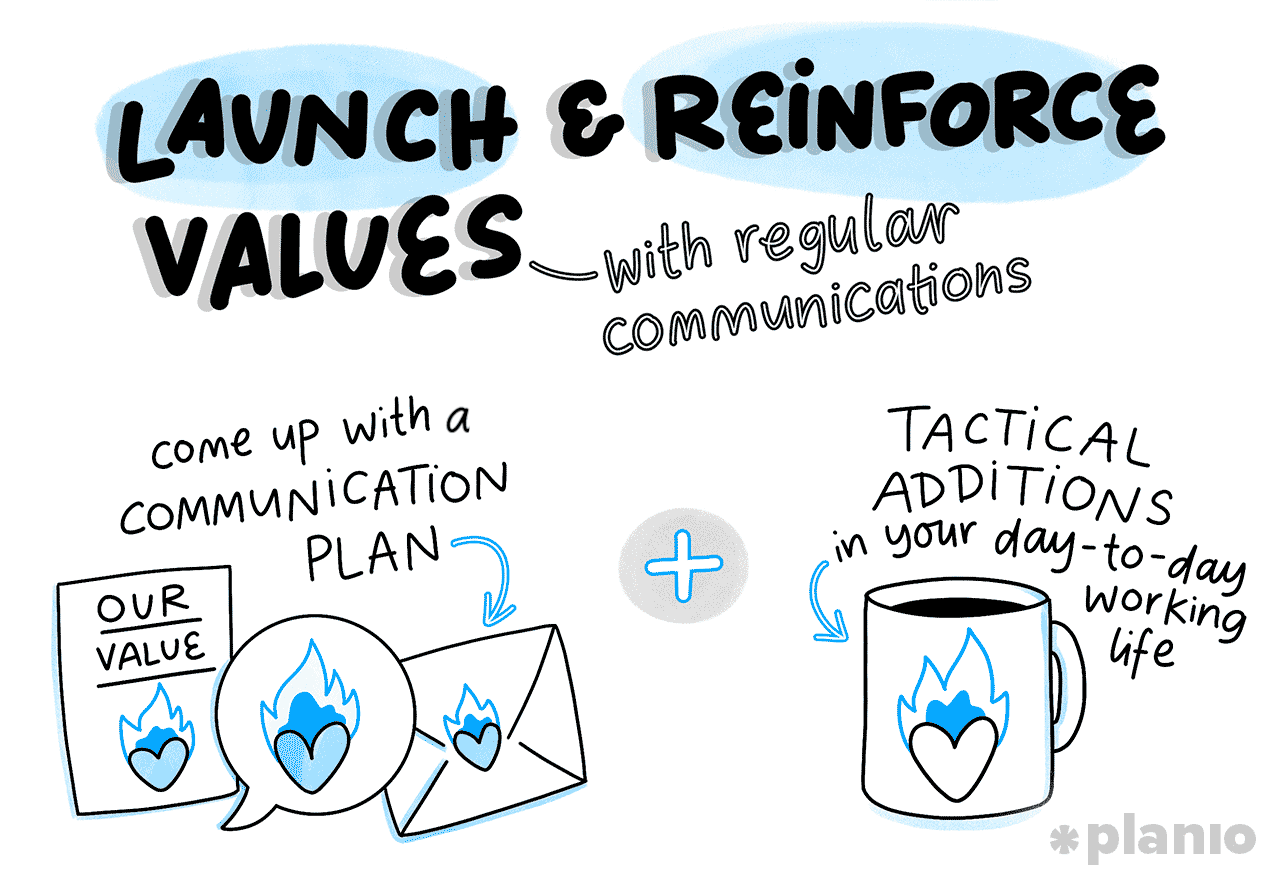
- Come up with a communication plan: Like all good things in business, the best values are launched and maintained with a dedicated communication plan. This ensures you’re hitting all the right channels and audiences in the way they best receive and take on new information.
- Tactical additions: Make your core values visible in your day-to-day working life. Add your core values to the footer of emails, put them onto your internal company wiki, make them part of the new employee handbook. Whatever it is for you, make them visible for employees every single day.
Reward employees for living by the values
Values are only maintained if they’re lived every day. And what gets rewarded, gets repeated. Tie your values to your performance reviews and recognition programs, making it explicitly clear that embodying company values is a core part of progression and reward.
- Give regular shoutouts: Create a peer-to-peer recognition channel in your team chat dedicated to shouting out value-driven behavior.
- Embed values in performance: Update your quarterly performance review templates (such as OKRs) to score employees and projects on value alignment, not just metric output.
Pro Tip: Keep your company values front and center: If you want to force your team to make sure their work serves your core values, integrate them right into your daily tools.
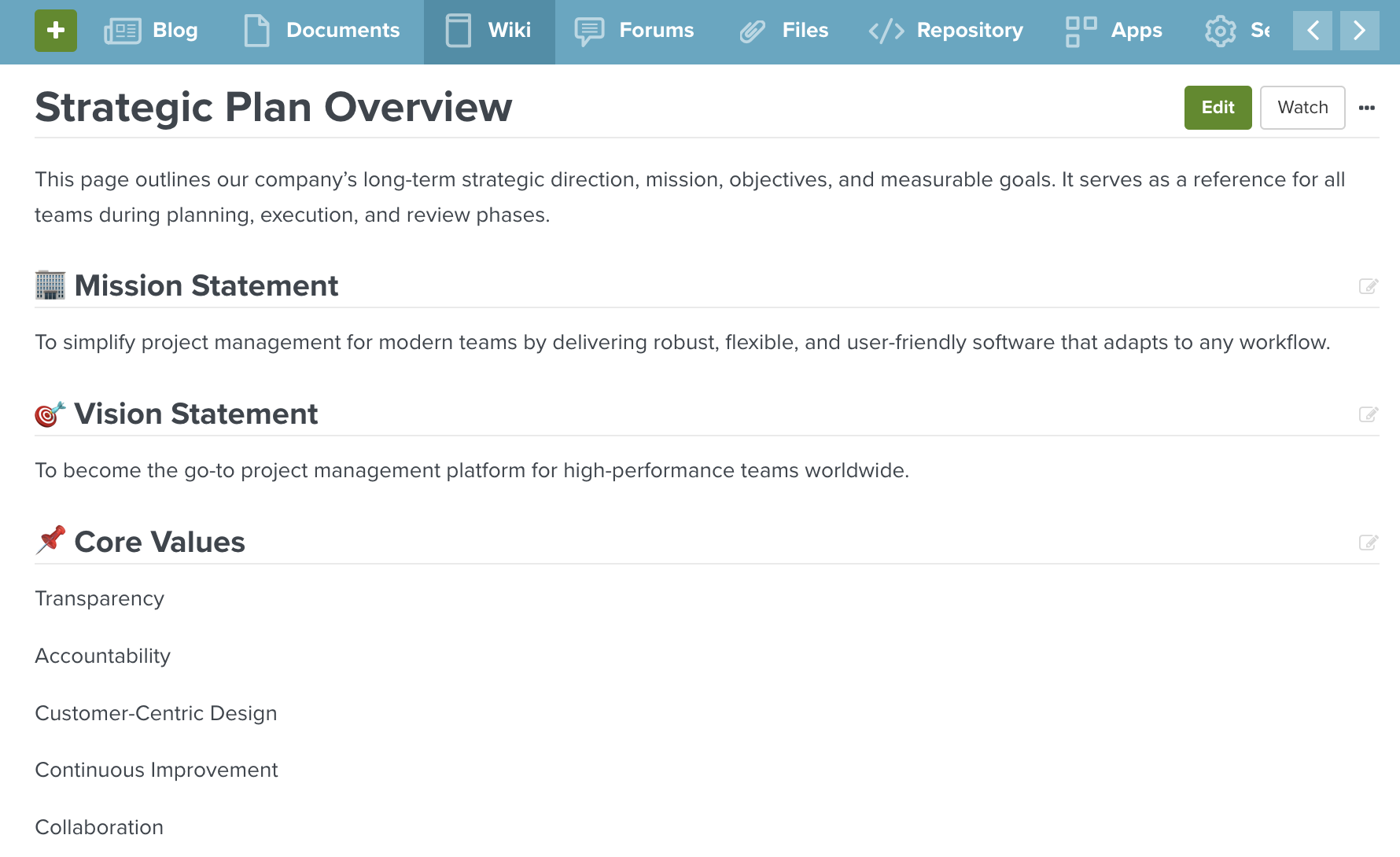
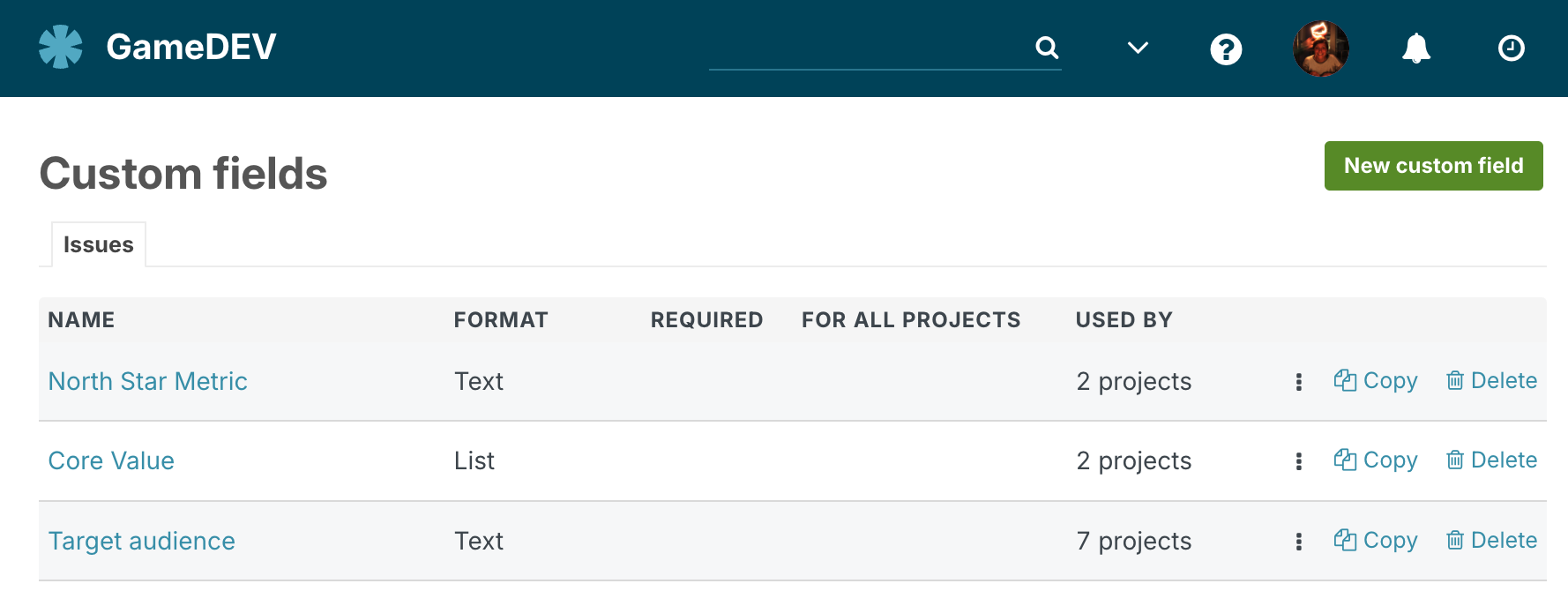
In Planio, you can use Custom Fields on your issues and tasks, requiring employees to tag which core value a new project or task supports before they can hit 'save.'
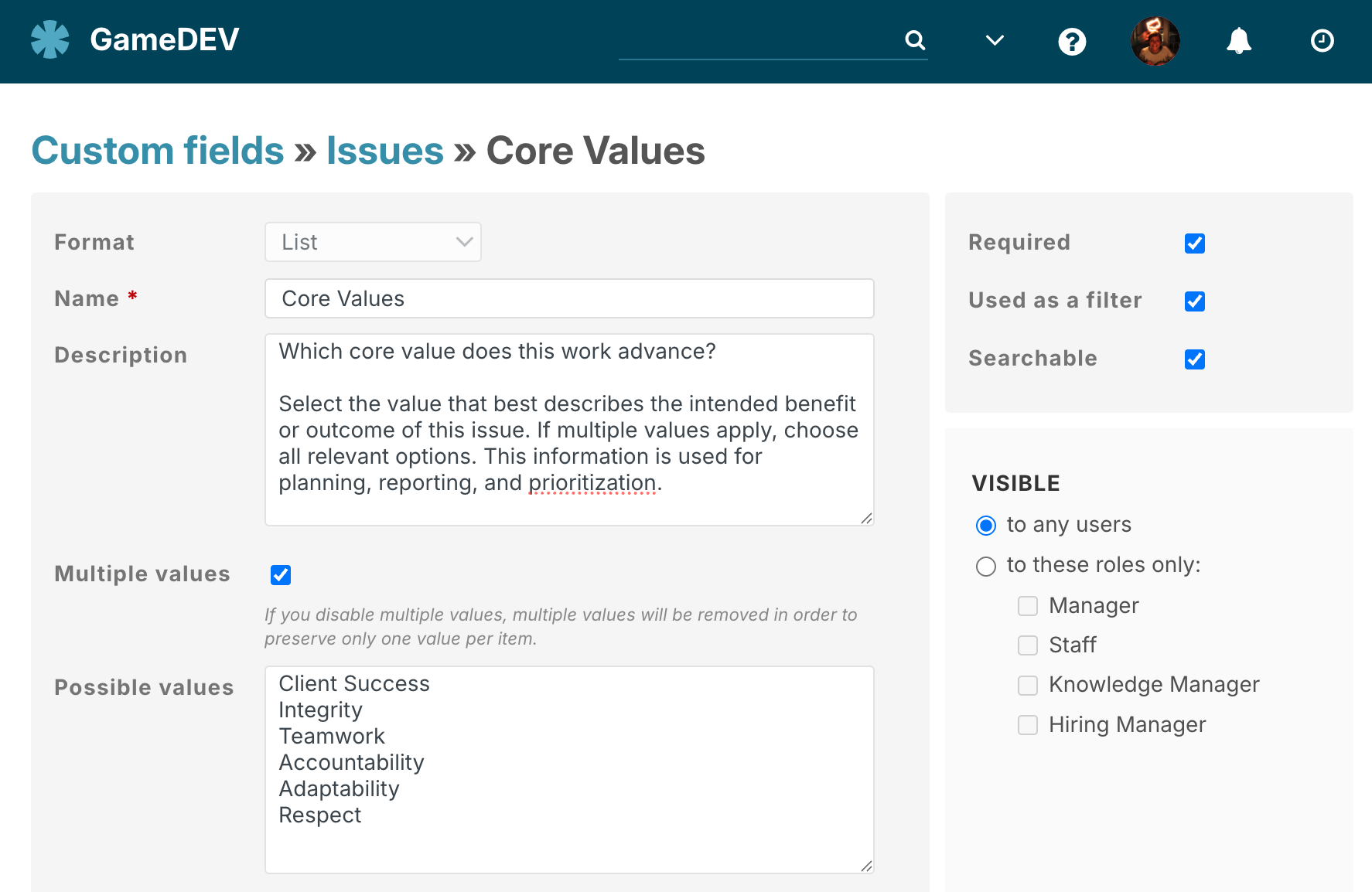
This simple step aligns daily task management directly with long-term company philosophy.
Company value examples to inspire you
Looking for inspiration when drafting your company values? Here are ten examples of publicly available core values from major companies. Remember, don’t just copy these when coming up with your values, just use them for inspiration!
Who are they? A multinational technology company focusing on search engine technology, online advertising, cloud computing, and software.
- Focus on the user and all else will follow
- It’s best to do one thing really, really well
- Fast is better than slow
- Democracy on the web works
- You don’t need to be at your desk to need an answer
- You can make money without doing evil
- There’s always more information out there
- The need for information crosses all borders
- You can be serious without a suit
- Great just isn’t good enough
Why these company values work: They read like an actual manifesto rather than a corporate checklist. They are incredibly specific to Google’s product (search/information) and dictate exactly how engineers should prioritize their time.
Patagonia
Who are they? An American retailer of outdoor recreation clothing and gear, known for its environmental activism.
- Build the best product
- Cause no unnecessary harm
- Use business to protect nature
- Not bound by convention
Why these company values work: They perfectly align with their target audience. By making "protect nature" a core value, they filter out any product decisions, supply chain choices, or hires that don’t support environmental sustainability.
Atlassian
Who are they? An Australian software company that develops products for software developers, project managers, and other software development teams.
- Open company, no bullshit
- Build with heart and balance
- Don’t #@!% the customer
- Play, as a team
- Be the change you seek
Why these company values work: They use casual, authentic language (including a bit of swearing) that resonates strongly with their core demographic of developers and engineers. It breaks down the corporate wall immediately.
Airbnb
Who are they? A San Francisco-based company operating an online marketplace for short-term homestays and experiences.
- Champion the mission
- Be a host
- Embrace the adventure
- Be a cereal entrepreneur
Why these company values work: "Be a host" takes the exact service they provide to customers and turns it into an internal mandate for how employees should treat each other—with hospitality, warmth, and care.
Slack
Who are they? A cloud-based team communication platform.
- Empathy
- Courtesy
- Thriving
- Craftsmanship
- Playfulness
- Solidarity
Why these company values work: While we don’t love one-word values, as a tool designed to replace the coldness of email with dynamic conversation, values like "Playfulness" and "Courtesy" directly influence how they design their UI, right down to the emojis and loading screen messages.
Netflix
Who are they? An American subscription video on-demand over-the-top streaming service and production company.
- Judgment
- Communication
- Curiosity
- Courage
- Passion
- Selflessness
- Innovation
- Inclusion
- Integrity
- Impact
Why these company values work: Netflix famously ties these values to a culture of "Freedom and Responsibility." They hire top performers, give them context, and trust their "Judgment" and "Courage," allowing them to operate without suffocating micromanagement.
Spotify
Who are they? A Swedish audio streaming and media services provider.
- One team
- Human judgment
- Make it happen
Why these company values work: Spotify combines a mix of togetherness and personal ownership in line with their human-centered, fast-moving organization.
Microsoft
Who are they? An American multinational technology corporation producing computer software, consumer electronics, and personal computers.
- Respect
- Integrity
- Accountability
Why these company values work: While they are traditional nouns, Microsoft backs them up with a massive global commitment to accessibility, sustainability, and privacy. They work because they provide a stable, reliable foundation for one of the most widely used enterprise companies on earth.
HubSpot
Who are they? An American developer and marketer of software products for inbound marketing, sales, and customer service.
- Humble
- Empathetic
- Adaptable
- Remarkable
- Transparent
Why these company values work: Using an acronym (HEART) makes the values incredibly easy for the team to remember. They don’t just ask employees to be good workers; they ask them to bring their humanity to the office.
Zoom
Who are they? A communications technology company that provides videotelephony and online chat services.
- Care — for our community, our customers, our company, our teammates, and ourselves
Why these company values work: It’s one single value, but in a way, it’s beautifully simple. By boiling everything down to a single word — Care — and applying it to every stakeholder, Zoom eliminates confusion. Every decision simply has to pass the "Does this show we care?" test.
The bottom line: Company values aren’t trivial
All too often, company values are treated as a branding or PR play. We slap them on a mousepad or a breakroom poster and then completely ignore them when an urgent deadline hits.
But the reality is that authentic core values are the backbone of almost everything your company does.
Yet, it’s never enough to simply write down your values — you need to live them and repeat them daily. That’s where a centralized team hub like Planio comes into play, helping you stay organized and connect daily tasks to the bigger picture.
Try Planio with your own team today — free for 30 days (no credit card required!)