Jan Schulz-Hofen on February 04, 2026
 A CEO’s guide on how to approach professional growth
The average person spends one-third of their lifetime — or around 90,000 hours — working. So, it’s no wonder that we’re all so caught up in being happy and fulfilled with our careers.
Yet, while surveys show that a slight majority of people are satisfied with their day-to-day work, many of us feel a never-ending nagging need for more.
Whether it’s chasing the next promotion, a pay rise, or just more responsibility, professional growth is often considered the only way to achieve fulfillment at work. But growth for growth’s sake is often a recipe for burnout and failure.
Throughout my career I’ve progressed from being a web designer and developer to agency owner and now CEO of a successful software company. But the path was rarely clear.
From my experiences — and the mistakes I’ve made along the way — I’ve realized the importance of spending regular time revisiting why you want to progress in your career, rather than just blindly chasing the next challenge.
Jump to a section:
In this guide, I want to share my own beliefs about career progression and best tips on how to thoughtfully design a career path for yourself that is fulfilling, rewarding, and balanced.
What should professional growth look like?
The truth is that there is no single answer to how professional growth should happen. However, that doesn’t stop business bloggers and websites from explaining exactly what you should do to progress in your career.
For example, here’s what comes up when I asked Google to define professional growth:
Professional growth is the ongoing process of developing and improving your skills, knowledge, and abilities to advance your career and enhance your professional capabilities.
Overall, this isn’t a bad definition, but it has one major flaw: it ignores the human element that influences so many of our decisions, both at work and in life.
Click on any of the top search results about career progression and you’ll get a list of similar advice, such as:
- Create a career plan for the job you want in 3, 5, or 10 years
- Complete training courses to strengthen the skills those jobs need
- Reformat your resume to appeal to the next job you want
- Start applying for those jobs and cross your fingers
In reality, most people’s motivations just aren’t that simple. These guides are built on outdated views of why people want to grow, completely disregarding personal satisfaction, our guiding principles and values, and ethical ambitions.
By looking for growth opportunities without considering the fundamental reasons why you’re stuck right now, you’ll become trapped in an endless cycle of wanting more with no end in sight.
That’s why, my personal definition of professional growth is slightly different:
Professional growth is the process of understanding your values, ambitions, and long-term goals and using them to guide purposeful actions that benefit both you and the people you work with.
That’s how I’ve tried to craft my career and the company culture at Planio. Rather than focus on raising huge rounds of funding and chasing the latest marketing trends, we’ve built a team of engineers with a passion for finding unique solutions to complex problems.
We share a set of core values around sustainability, creativity, and balance — and every decision we make is informed by them.
While those might not be the values that drive you forward, considering what makes you feel satisfied is a good place to start when approaching career growth.
By looking for growth opportunities without considering the fundamental reasons why you’re stuck, you’ll become trapped in an endless cycle of wanting more with no end in sight.
My best advice on how to approach professional growth
To get unstuck and make a solid plan for meaningful professional growth, you need to take time to reflect, plan, and take purposeful action.
Here are a few exercises I like to try whenever I’m at a loss of which path to choose next:
Start with your values, not your goals
Before looking ahead, it’s important to look inwards at who you are and what brings you happiness.
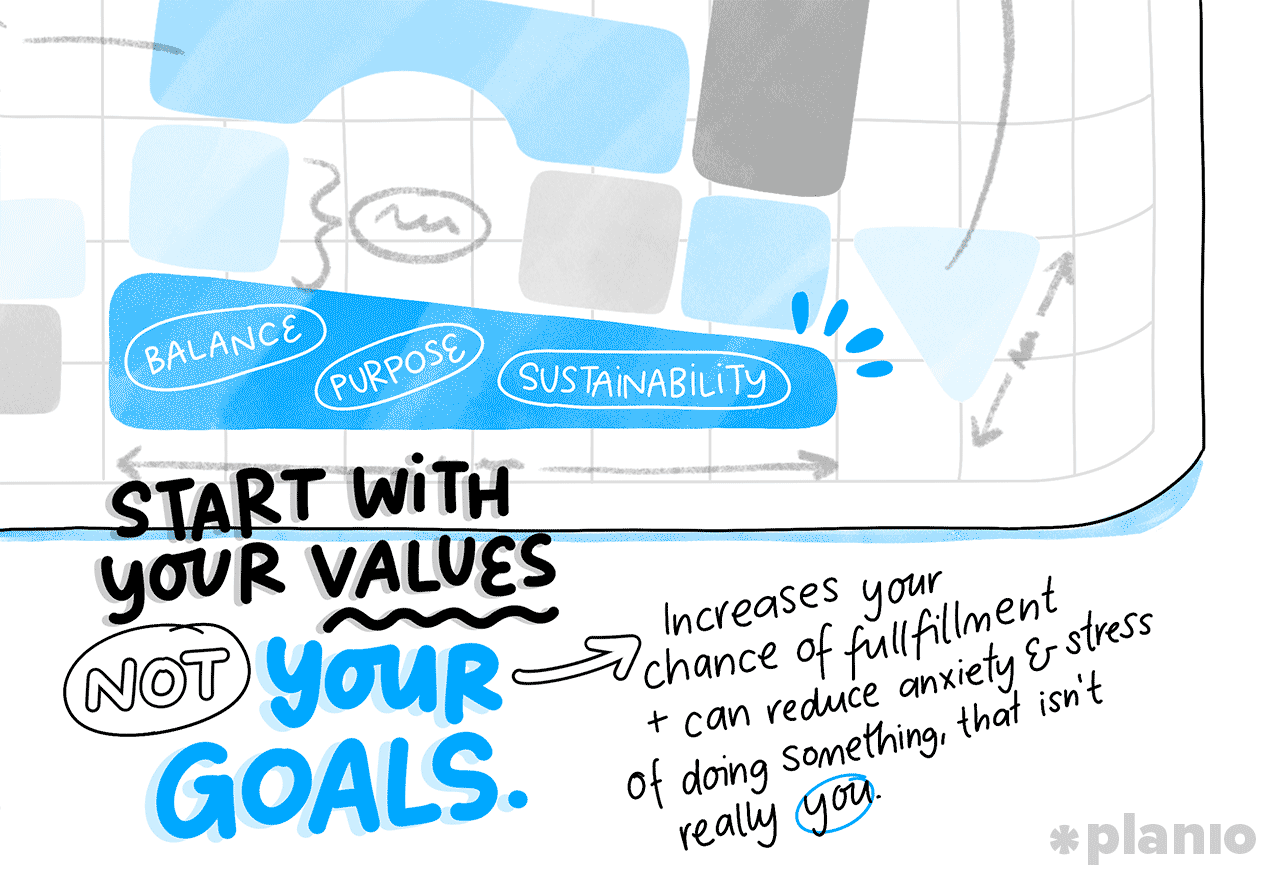
Aligning your future goals to your personal values increases your chance of fulfillment and can even reduce the anxiety and stress of doing something that isn’t really you.
If you blindly chase your goals, you might inadvertently put yourself at risk of burnout.
Start by answering some of these self reflection questions to better understand your values and motivations:
- What is important to you? Consider what you care about deeply and what motivates your actions.
- What would a perfect day look like? What activities and interactions would bring you the most fulfillment — e.g., working with others vs. focused work.
- What do you spend your free time on? What activities and interests energize you outside of work?
- What would you do if there were no limitations? Think outside the box.
- What qualities do you admire in others? What traits do you find inspiring and why?
- What do you want your life to stand for? What legacy do you want to leave?
Take stock of where you are now
While you think through your core values, it’s a good idea to try to apply them to why you feel the need to change your current position.
Do you feel like you’re not being challenged enough in your current position? Are you looking for more responsibility? A new title? Higher pay? Respect from others in your industry?
Sometimes, when we reflect on where we are and where we want to be, it becomes clear that the changes don’t need to be so drastic. A few adjustments could be all it takes to become more fulfilled and happy with your current position.
Don’t always feel like you have to make large changes just to “keep up” with expectations or what other people are chasing.
Think long-term when planning your goals
Once you’ve established that you want a change and understand what motivates you, it’s time to look forward to your goals. It’s important to balance your short and long-term goal setting to ensure you have a North Star to aim for, but still maintain flexibility to react to whatever life brings.
Remember, goals are just guesses. What you want now may change in a year, a month, or even a day. So, give yourself a target to aim for, but don’t be afraid to pivot if it feels right.
Here are some resources to help you think about your goals:
- Take advantage of proven goal-setting exercises. There’s an art to goal setting that takes time to master. While it’s focused on techies, our goal setting guide has some transferable insights to help you set goals like a high performer.
- Don’t get trapped by your limiting beliefs. We all have limiting beliefs — ingrained ways of thinking that can hold us back from dreaming big and ignoring our true long-term vision. Especially when you think about your long-term goals, don’t be afraid to be ambitious and take risks.
If you feel overwhelmed, try the WOOP method
Planning your professional growth can become overwhelming. As you grapple with the feelings of wanting more, it can feel like there’s too many paths to choose from, leaving you lost, confused, and unable to make a purposeful plan.
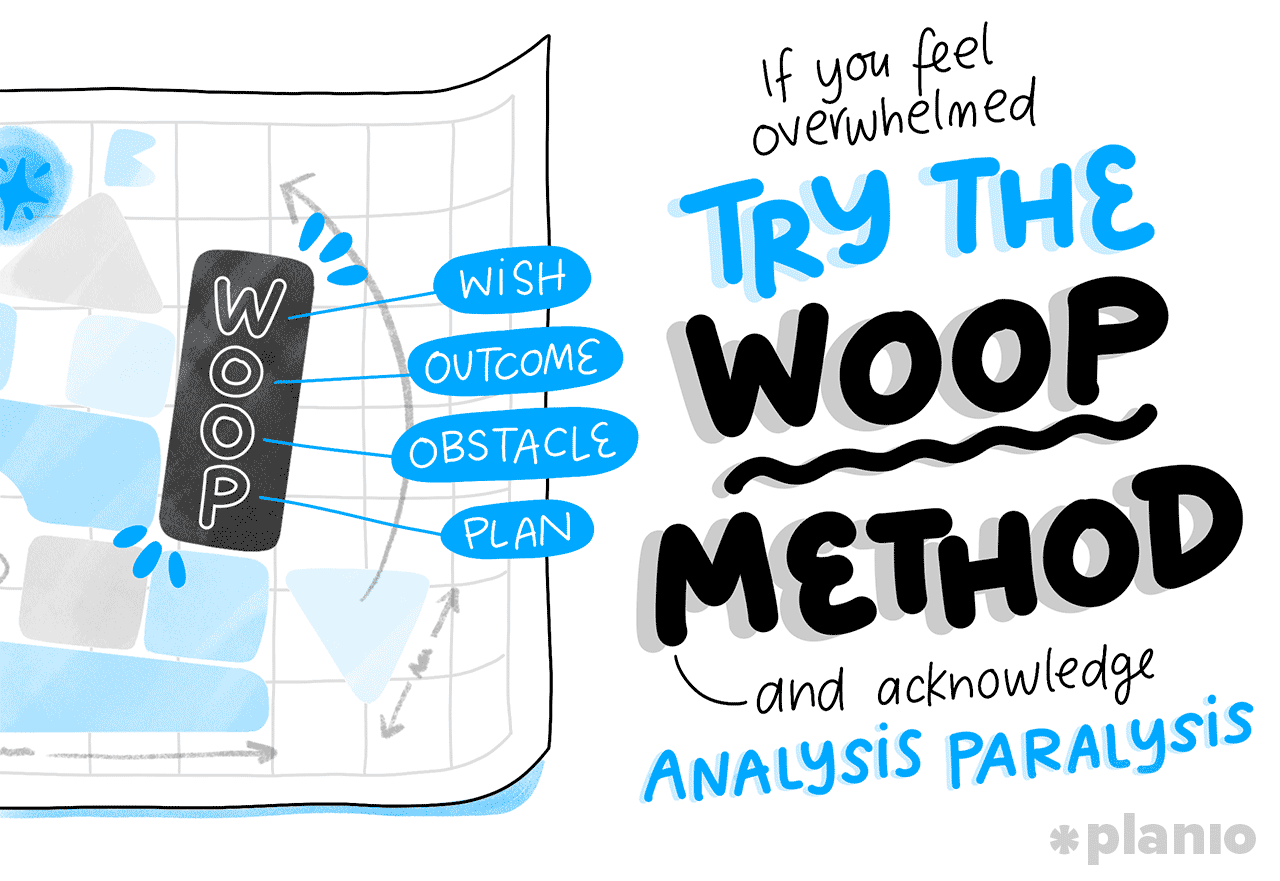
Here are two methods to help you move forward:
- Acknowledge analysis paralysis. When faced with too many options, analysis paralysis stops us from picking a path and moving forward. If you’re facing a crossroad, techniques such as creating psychological safety, setting decision deadlines, and overcoming perfectionism are great ways to break through the noise and make progress.
- Try the WOOP (Wish, Outcome, Obstacle, Plan) method. WOOP is a positive psychology strategy that helps you achieve your goals by visualizing positive outcomes and anticipating potential obstacles. Here are just some of the ways people use WOOP to overcome challenges:
| WOOP Stage | Use Case: Studying | Use Case: Fitness | Use Case: Professional Growth |
|---|---|---|---|
| Wish | “I want to improve my grades” | “I want to run a 25:00 5km” | “I want to be promoted to Senior Manager” |
| Outcome | “I will be proud holding my exam results surrounded by my family and friends” | “I will finish in the top 10% of my next race and receive a medal” | “I will interview for a job and be successful against other applicants” |
| Obstacle | “I struggle with motivation to study” | “I struggle with shin splints” | “I don’t have the relevant experience dealing with senior stakeholders” |
| Plan | “I will set a clear study schedule and study with a friend” | “I will mix running with other exercise, such as swimming, to improve my fitness while minimizing injury” | “I will volunteer for additional projects with a different team who frequently work with senior team members” |
Find like-minded people and mentors (and create real connections)
Motivational speaker Jim Rohn once said that you’re the average of the five people you spend the most time with. While I don’t believe this is strictly true, I do agree that to become the person you want to be, it pays to be around like-minded people.
In the professional world, your network is a powerful thing, providing you with access to support, guidance, knowledge, and wisdom that helps you grow and develop into the person you want to be.
Here’s some advice for building a great network:
- Play the long game. A valuable network isn’t built in a day. Instead, focus on creating real, long-lasting relationships that will benefit you in the long term. A meaningless relationship with an immediate payoff might feel good in the moment, but won’t give you the benefit of a genuine connection.
- Take advantage of mentoring. Most successful people have, or have had, mentors throughout their career. Mentoring is a great way to gain knowledge, share ideas, and have honest conversations about your personal and professional growth with someone who is outside your direct career trajectory.
Master your core skills, but regularly look for new challenges
The professional growth narrative becomes toxic when it encourages people to become an expert at everything. This simply isn’t possible.
Whether you’re a developer, project manager, or an accountant, it’s important to continually focus and strengthen a core set of skills. This is your foundation that helps you excel in your chosen industry.
But, you should never stop learning. Try to foster a sense of curiosity to help you grow and develop next skills that open the door to new and exciting opportunities.
Here are some areas to think about:
- Divergence vs. convergence. The most successful people balance structure and discipline with creative thinking and problem-solving. This requires a healthy mix of convergent and divergent thinking. We all favor one of these sides, so make sure you’re regularly challenging yourself to develop the other side too.
- Leadership vs. management. For many people, professional growth is focused on moving upwards in their career. While some shoot for mastery of a particular role (e.g. software development), most focus on developing their leadership and management skills. They’re both slightly different things, so if you’re looking to develop, put an equal focus on each one to succeed.
Be reliable and hit your targets
While development is important, to truly grow you need someone to take a chance on you.
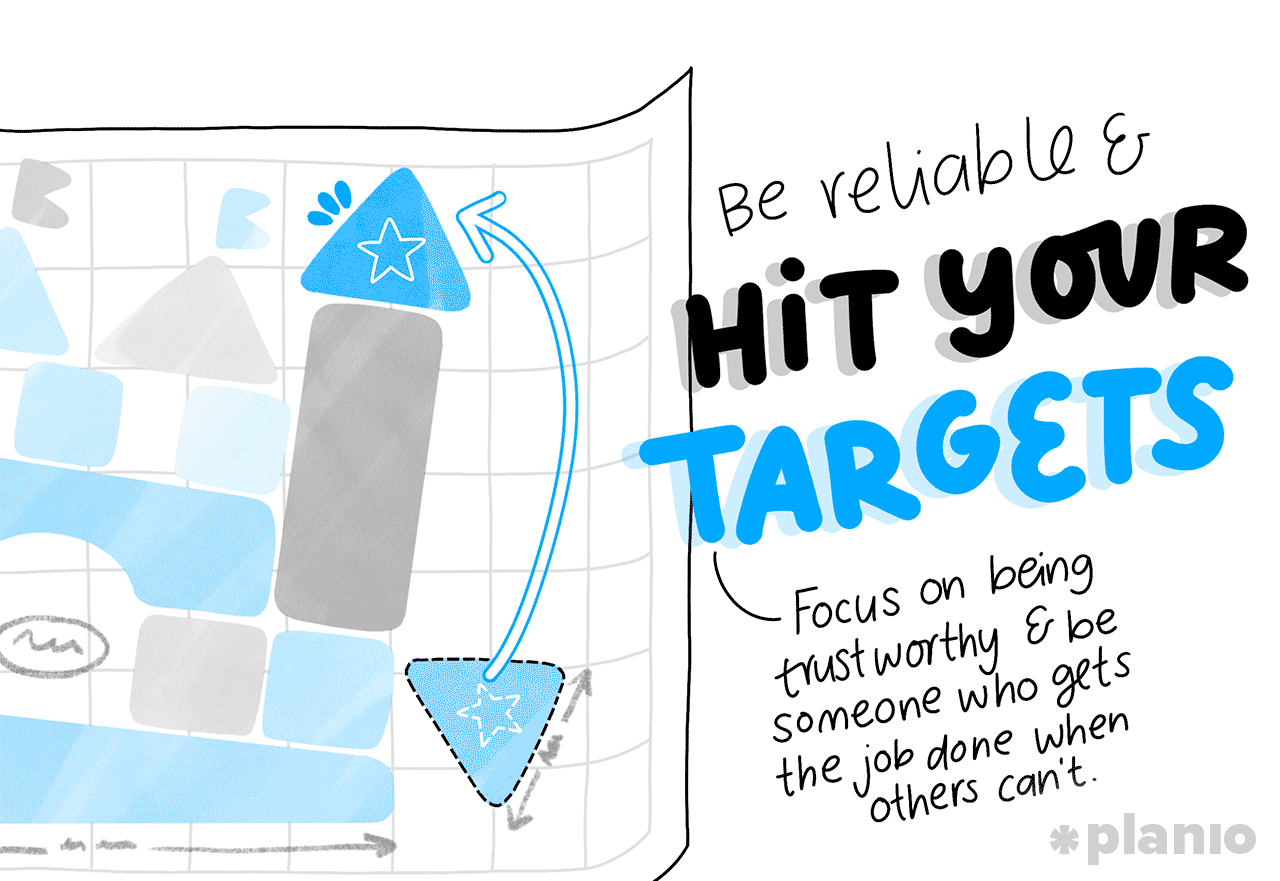
The best way to do that is to focus on being reliable and trustworthy — someone that can be trusted to get the job done when others can’t. Without building that reputation, it’s going to be difficult to progress onto the next stage of your career.
Here are a few areas I like to focus on to show that I’m a reliable person to work with:
- Soft skills. The best professionals have a core set of soft skills to help them hit their targets and optimize their self-management. Focus on developing your organization, time management, communication, and relationship building to put you in the best position to grow and succeed.
- Just get stuff done. The world is full of people who are great at pointing out problems. What leaders really want is someone who can face a challenge, take ownership, and get the job done. Here’s a great video from Barack Obama on the power of being a “get stuff done” type of person.
Bring (most of) your whole self to work
To strike the balance between professional growth and protecting your mental well-being, you need to bring your whole self to your work. That means not being afraid to share who you are, what matters to you and your hobbies and interests. This creates an open work environment, while also building trust and authenticity.
Here’s a couple of more tips:
- Protect your energy. Find ways to combine your professional work (and growth) and your day-to-day life. But at the same time, be careful to not fall out of balance to protect personal energy. Fail to make time for “you” at work, and you’ll quickly become demotivated and risk burning out.
- Celebrate, celebrate, celebrate. In the professional world, we don’t take enough opportunities to celebrate. As you embark on your journey, spend less time looking ahead and more time celebrating how far you’ve come. Not only will it motivate you, but celebrating is the perfect way to strengthen trust and build lasting relationships.
As you head out on your professional growth journey, focus on doing it in a controlled and sustainable way.
Don’t rush — progress with purpose and awareness
To finish, remember that professional growth is a journey that takes time. Many people want success instantly, but often it takes time to nurture, manifest, and develop at its speed — rush it, and you risk damage rather than success.
As you head out on your professional growth journey, focus on doing it in a controlled and sustainable way:
- Step back as much as you step forward. Continually re-align your actions to your values, ensuring wherever you’re heading lines up with the “real you” and what makes you happy.
- Practice reflection and resilience. Making mistakes is an evitable part of growth. If something doesn’t feel right, chances are it wasn’t the right step. Don’t get down about it, learn from your mistakes, brush yourself off, and use the experience to make a better decision next time.
- Don’t be afraid to take risks. Career paths rarely go in a straight line. Instead, they meander as new doors open, opportunities arise, and plans you thought were certain fall apart. Don’t be afraid to take a risk here and there, as long as it aligns with your values, purpose, and fulfillment.
The bottom line: Make sure you’re growing in the right direction.
Growth for the sake of growth is never good. While for some, the nagging feeling of wanting more just won’t go away, pushing hard for that next promotion or pay rise isn’t always the right way to grow.
Instead, take a more considered, value-driven approach to career progression by taking time to understand yourself, what makes you happy, and how your career can align with your goals and dreams.
Grow in this way, and you’re far more likely to reach fulfillment without risking your mental health along the road.
At Planio, taking this considered approach to growth is our secret to success. Rather than focusing on fancy features and lavish marketing, we created a simple tool that cultivated success, by making it easy for our worldwide team to ship working software, day in, day out.
It’s worked pretty well for us so far, so I hope these same tips will help you on your own professional growth journey!