Jan Schulz-Hofen on April 15, 2026
 The startup founder’s guide to building a strong company culture
If you’re trying to “build a company culture” because you’ve heard it will make you more productive and profitable, you’re missing the point.
Yes, studies show that a great culture can boost productivity by 12% and revenue by 33% — but that’s not why you should care about your team’s culture.
Culture-led initiatives can’t be designed with direct ROI in mind — instead, those results only come when you create an authentic culture that embodies your values and respects the people on your team.
Creating and maintaining a meaningful company culture is hard work, especially when you’re growing rapidly. But one thing I’ve learned over the past few decades as a business owner and CEO is that ignoring culture and company values isn’t an option.
In this guide, I’ll run you through my (sometimes contrarian) beliefs about company culture, how I’ve seen it go wrong, and the steps you can take today to start building an honest and worthwhile culture with your team today.
Jump to a section:
What is company culture, really?
Despite what some thought leaders will have you think, company culture isn’t about awkward team-building activities, your benefits package, or performance management processes.
If you try to build your culture around these things, employees will quickly see through it, and view “culture” as just another distraction — or worse, a way to force them into doing things they don’t want to do.
Company culture is a set of values, behaviors, norms, and expectations that are agreed upon and followed at all levels of the organization.
To keep your culture front-of-mind, you need to live it daily. Cultural values need to be regularly communicated, shared, and reinforced, and, in the long-term, updated as things change.
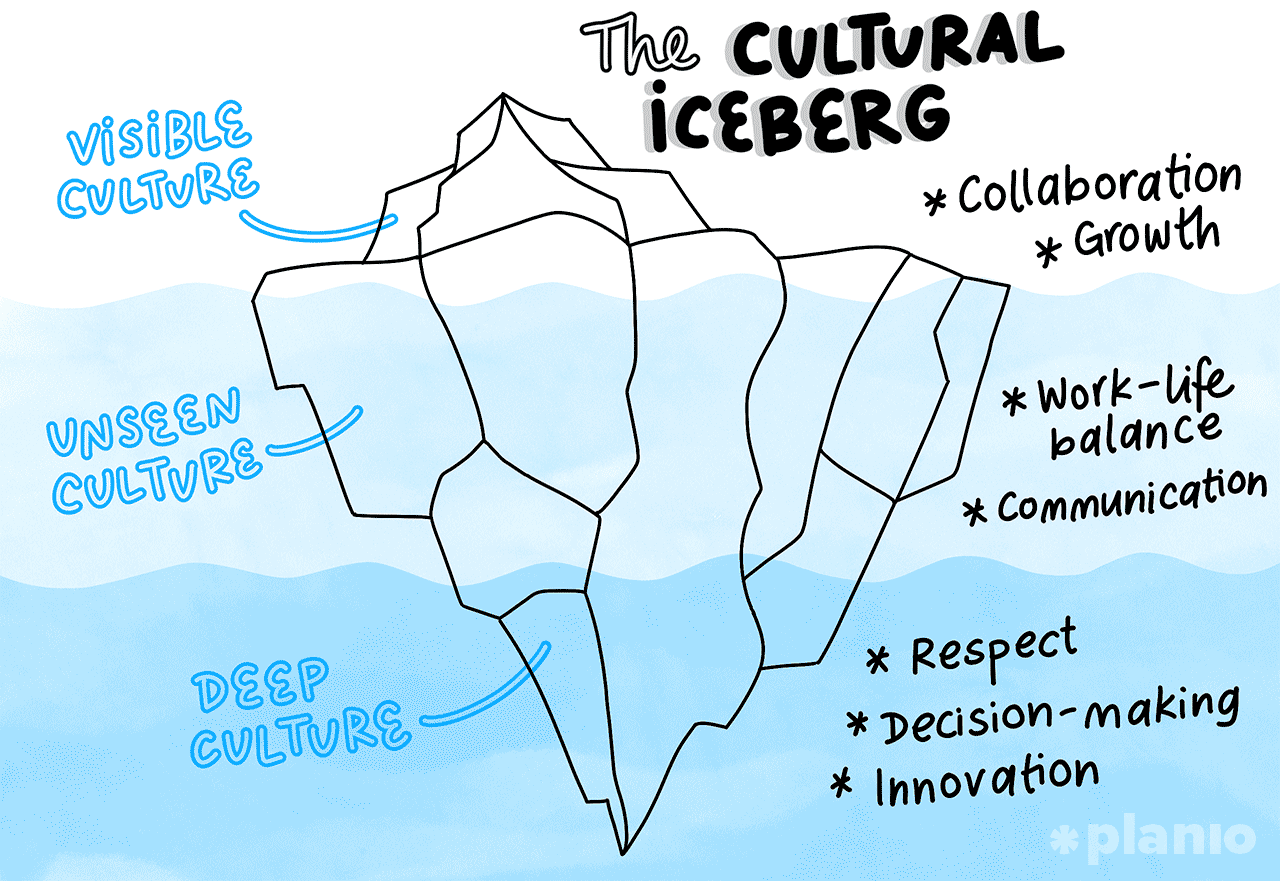
Approaching culture in this way makes it more than just words on your About Us page. The culture becomes the foundation of everything you do — fueling decisions, shaping objectives, and underpinning how you’re seen by users and customers.
Here are some examples of how cultural qualities should look and feel day-to-day:
| Cultural quality | What it might look like |
|---|---|
| Collaboration | Opportunities to work across teams — both in-person and asynchronously with project management tools. |
| Respect | Team members freely give their opinions and beliefs without fear of repercussions or embarrassment, thanks to feeling a sense of psychological safety. |
| Innovation | Teams have the capacity to explore new ideas with a focus on creativity, out-of-the box thinking, and trial and error. |
| Work-life balance | Employees have clear boundaries between work and life, with support to manage stress and reduce the risk of burnout. |
| Decision-making | Decisions are made objectively using data and facts. Everyone has the opportunity to input and share their views. |
| Communication | Communication is honest, open, and transparent, catering to employee’s needs where required. |
| Growth | Employees have opportunities to learn and grow in their roles and careers, with time and capacity to complete training. |
As leaders, if you’re responsible for shaping a culture, it has to be something you believe, too. Employees will look to you to embody your cultural values, and if you aren’t truly living them, neither will they.
To help with this, many successful leaders link their cultural values to their mission statement, objectives, and goals, creating a “golden thread” through the entire organization. This helps with alignment, but has to be updated when those other aspects change too.
The dark side of trying too hard to build a company culture
It’s worth repeating that building and maintaining a great culture is hard work, and it’s even tougher when you don’t align it to your true values.
If you try to create a culture that looks good on paper, but you don’t actually believe in, you’ll end up doing more harm than good.
Here are some examples:
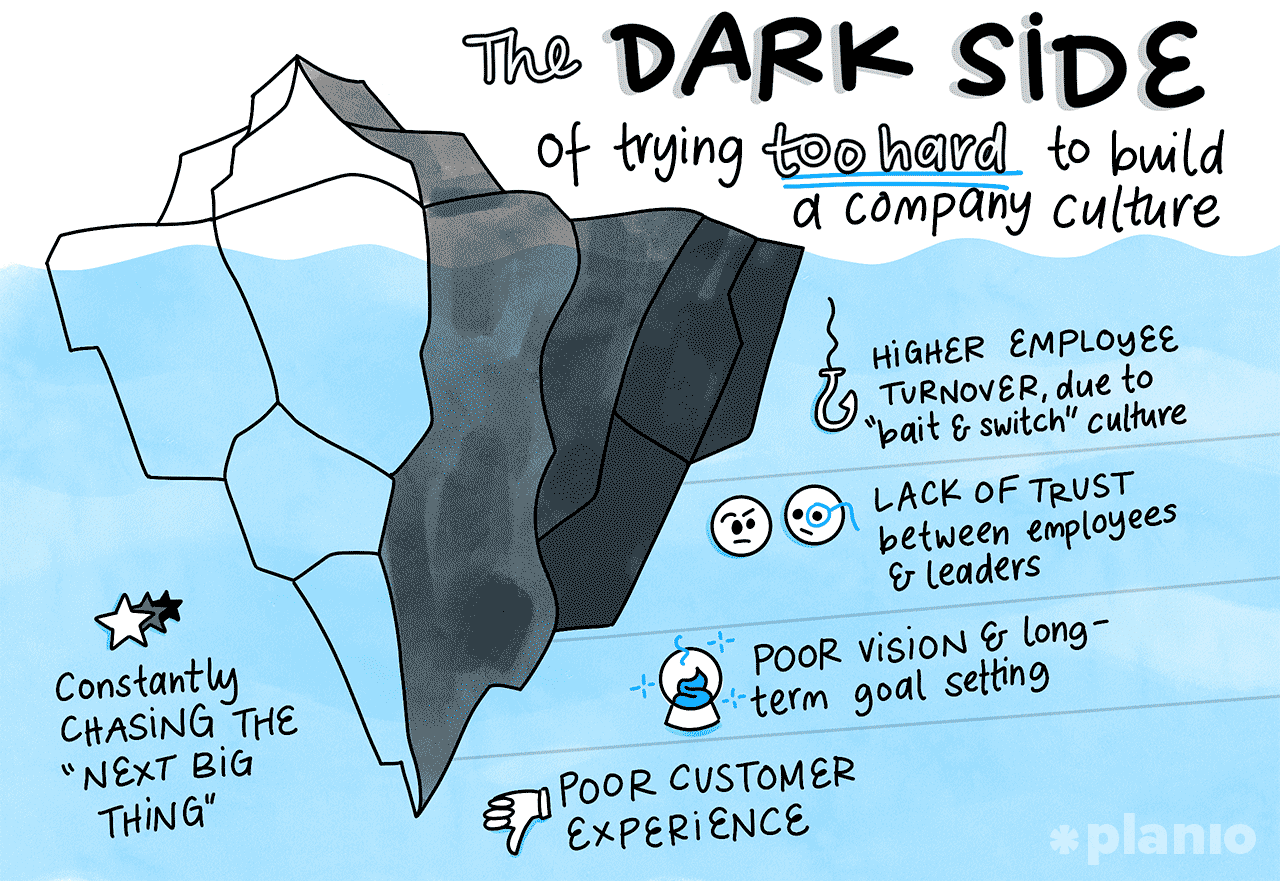
- Higher employee turnover, due to a “bait and switch” culture. When the day-to-day experiences of working at your company don’t align with your sales pitch, employees are likely to become disillusioned, demotivated, and inspired to look for something different.
- Lack of trust between employees and leaders. The employees you do manage to keep hold of won’t be too happy, either, as a disconnected culture erodes trust between teams and leaders. This lack of trust impacts collaboration and productivity, making you all less effective as a whole.
- Poor vision and long-term goal-setting. If you can’t create that golden thread between your mission and culture, it’ll impact your vision, goals, and objectives. This breeds inefficiency, leaving you behind your competition and at risk of decreased revenue.
- Constantly chasing the “next big thing”. Without a strong culture, you have no grounding, leaving you open to flip-flopping between different ideas and trends. This is confusing for your team, leaving them demotivated and burnt out.
- Poor customer experience. Looking externally, your customers and users can spot a demotivated and disorganized team from a mile off. If your culture is lacking, it’s doing to start turning customers off, leading to reputational damage, too.
8 factors that define your company’s culture
Defining your company culture is an evolution. You may have an idea of what it already is, but just need some help drawing a boundary around your values. In other situations, you may be lost or feel like you’re in a transition point in your company’s growth and need more guidance.
No matter your situation, it’s important to understand that culture is more than just a single document; it’s an agreement created by a mix of words, actions, expectations, behaviors, and communications.
To keep your company culture front-of-mind, you need to live it daily.
Let’s look at all the factors that will determine if your culture is really a success:
- What you say your culture is. Companies can communicate their values and culture through mission and vision statements. But rather than the be-all-end-all, these words are a starting point at best. If you don’t live up to them, they’re worthless.
- How you communicate your company culture. Everyone needs to be communicated to in different ways. Simply standing up at your monthly town hall and spouting cultural values isn’t enough. Cultural messages need to be present in all your communications and cascaded down through all levels of the organization.
- How decisions are made. Making tough decisions is a big part of being a leader, and sometimes, your decisions will make others unhappy. But, if you can show you made them by following your cultural values, it helps others relate to them and get on board regardless of the outcome.
- How leaders treat employees. At the end of the day, we’re all people — and that extends to every level of the organization. While leaders need to make tough calls, how you interact with employees at all levels is crucial to showing you’re living the culture you’ve set.
- Expectations and norms around workload. The best cultures aren’t the ones that burn people out. While all jobs require periods of intensity, how you set expectations and norms on workload is a big indicator of the culture you want to drive.
- How you act when things get tough. Having a strong, well-connected culture really pays off when things aren’t going well. As leaders, it’s important to embody your values extra diligently during hard times.
- How (and how often) people communicate with each other. A strong company culture promotes collaboration, teamwork, and togetherness, but that only happens when people communicate. Regularly getting people talking is important to building great connections and a sense of belonging.
- How you promote inclusion. The best teams are those with a diverse mix of backgrounds, experience, opinions, and work styles. How you promote inclusivity is essential to building a great culture.
How to build a strong company culture
Company cultures rarely arise on their own — you need to take a structured step-by-step approach to make them happen.
While the steps you take will ultimately depend on your management style and the people you work with, this guide can help you answer common questions that come up along the way.
Define your personal values
As the leader, your company’s values have to align with your own. This can be quite a reflective process, where you dive deep into what matters to you, what motivates you, and how you’d like the company to be shaped in your image.
Consider these things:
- Building a personal brand. The Harvard Business Review offers great insights into building a personal brand based on your values. If you’re a founder or leader, this is a great foundation to build a company culture from.
- Work and leadership styles. The Planio blog has two great articles on work styles and leadership styles, both of which give great insights into how you work with others and what you expect from a healthy work environment.
Solicit feedback on your current values and culture
As you’re forming an idea of a culture built in your image, it’s important to ask others their views too. The best cultures are those that have an element of co-creation, where other leaders, managers, and employees gain ownership by feeling like they’ve shaped the process.
Consider these things:
- Ask what’s already there. If you’re re-shaping an existing culture, there’s a chance that plenty of great things are already happening. Whether team rituals, ways of working, or shared team values, great cultures don’t always have to be built from scratch.
- Create channels for honest feedback. As a leader, your natural position of power might stop you from getting honest feedback. To overcome this, vary the feedback channels on offer to create anonymity and honesty.
Design cultural goals with real KPIs attached to them
Culture shouldn’t have an ROI attached to it, but that doesn’t mean you shouldn’t measure its success (or failure). Without tangible KPIs, it’s impossible to tell if you’re making progress.
Consider these things:
- North Star metrics. Setting North Star metrics is a great way to align everyone in your organisation around a common purpose. While typically a product-based metrics, the same concepts can easily apply to cultural measurements too.
- Focus on common culture-led KPIs. Here are some great examples of good cultural-focused KPIs to help you get started: employee engagement, turnover rates, employee satisfaction, and internal promotion rates.
Draft, align, and agree on your new cultural values
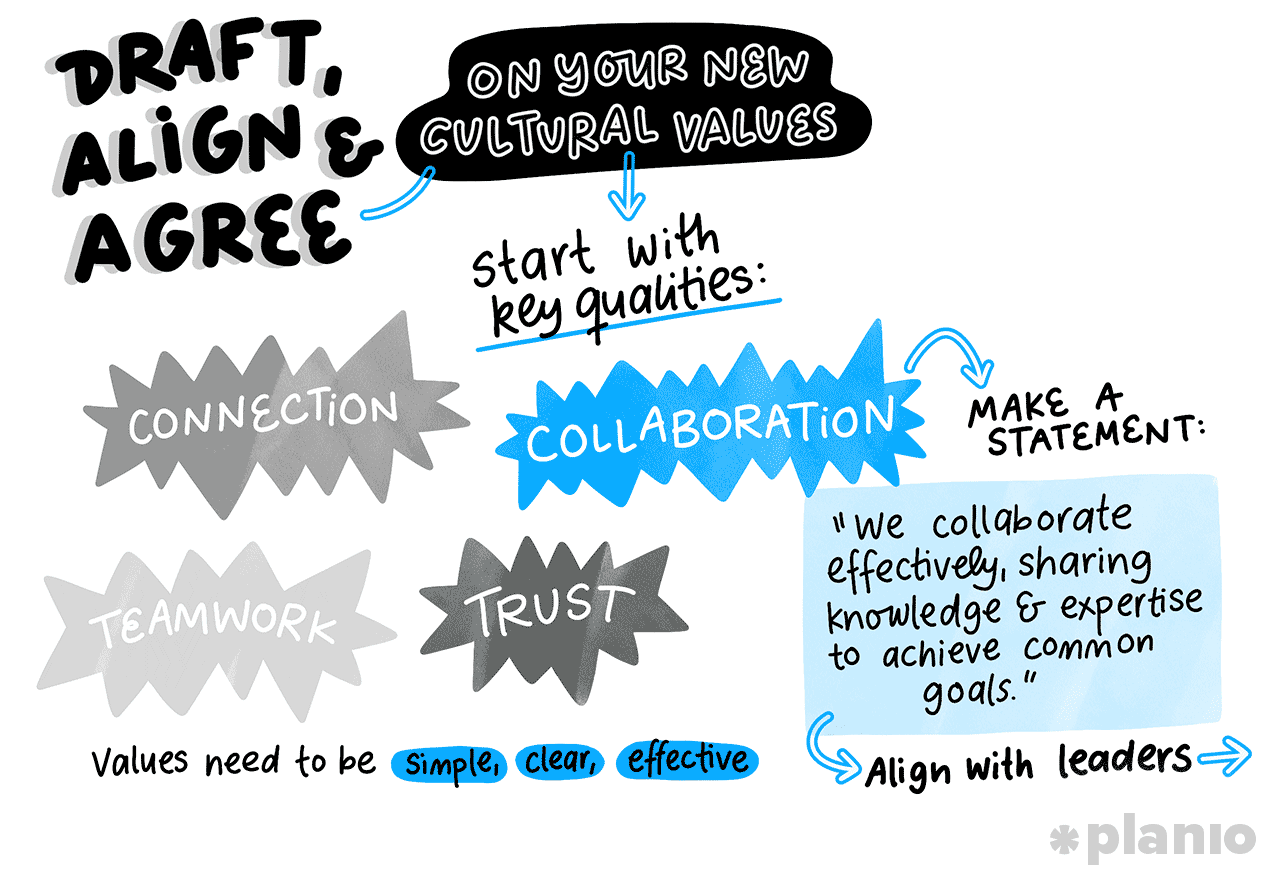
With the foundations set, it’s time to draft your new cultural values. These values need to be simple, clear, and effective to avoid confusion and enable employees to buy-in straight away. Once drafted, align with leaders to sense check.
Consider these things:
- Start with key qualities. Start by identifying 3–5 qualities that are most important to you and your company, such as teamwork, innovation, connection, trust, collaboration, or bravery.
- Make a statement. Then, for each quality, write a clear and concise statement that explains how you’ll do it at your company. E.g. “We collaborate effectively, sharing knowledge and expertise to achieve common goals.”
Begin the communication cascade
Great culture is regularly communicated, shared, and reinforced. Begin this by communicating your cultural statements down through your organization, using your leadership teams and managers to support you.
Consider these things:
- Create a plan. Like many things, the best communications happen when you have a plan. Our Planio article on creating a communication plan can help guide you (and even includes a free template).
- Use real examples. With your culture statements set, I’d recommend encouraging your managers to use real-life examples to bring them to life. For example, to encourage collaboration, teams might start having Agile ceremonies or set up new IM chats to keep the conversation flowing.
Empower teams to break down silos and enrich culture
As a leader, it’s essential that you empower teams to work together and actively enrich the culture. There are hundreds of ways you can do this, but start by focusing on three simple things.
- Trust and feedback. Building trust between leaders, managers, and employees is essential to breaking down silos, building psychological safety, and encouraging a culture to form. Create forums for employees to discuss culture with you and provide feedback — both positive and negative.
- Recognition. Create mechanisms to reward and recognize those who empower your cultural values in their everyday work. Sure, this will cost you some money, but it’s worth it to reinforce the right behaviors and encourage people to take the right actions.
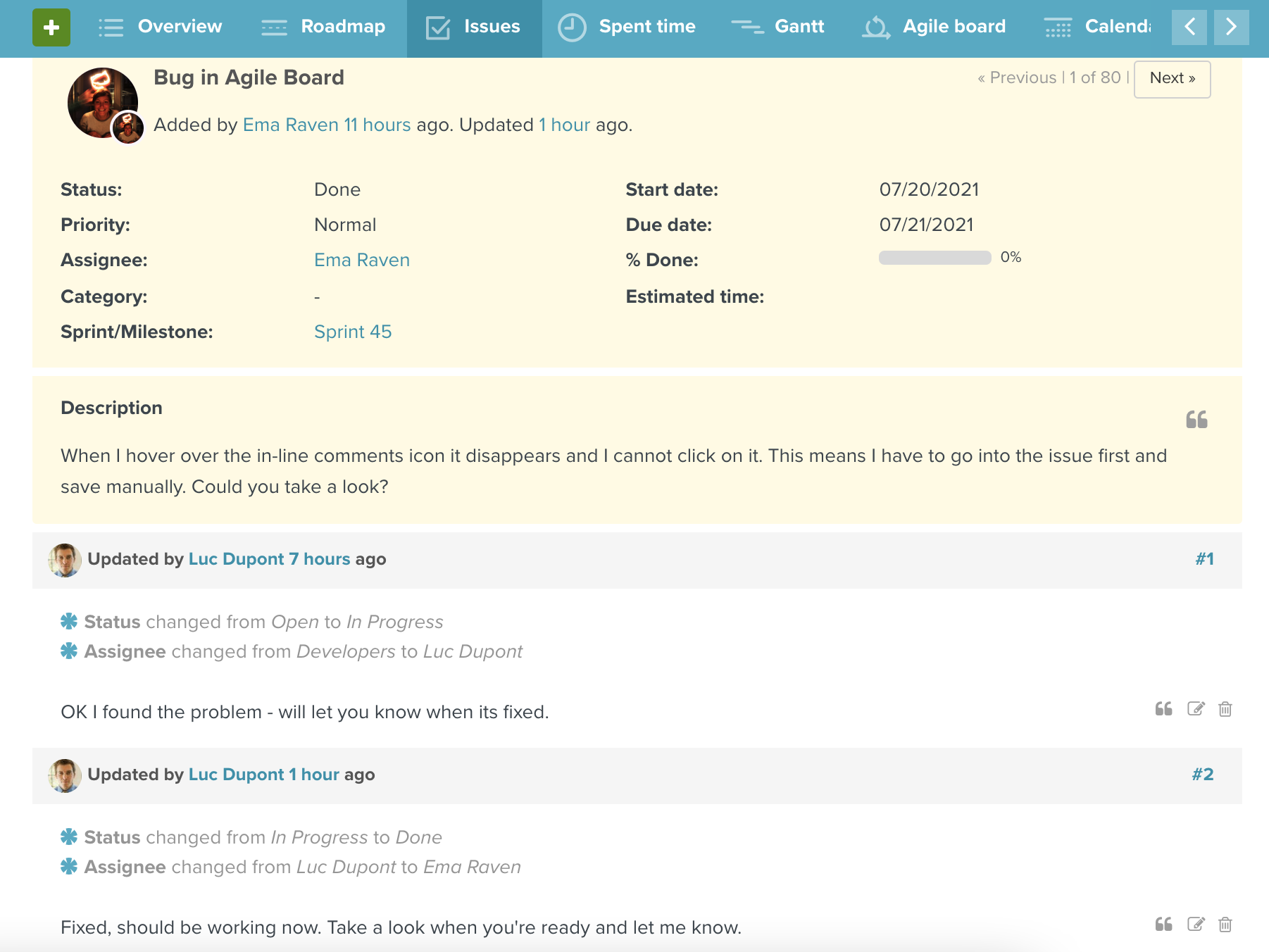
- Tooling. Every company is a technology company in this day and age, so you need to give employees the tools to live your culture.
This is one of the reasons we built Planio, to enable teams to work together, collaborate, communicate, and build great connections as a team.
I’d encourage anyone to take a look at our range of features for tasks, communication, document management, and projects, to enable your teams to work in the right way, even those who work remote — Find out more here!
Use your cultural values as a lens for other projects
Lastly, to fully embed your culture, your values need to flow through everything that you do. As well as being “who” you are, cultural values are “what” you are, and should shape processes, decisions, propositions, and product roadmaps.
Here are some examples to bring this to life:
- Feature prioritization. A company built on collaboration and communication may focus on building features that enable that for their users. After all, most products are an extension of themselves.
- Hiring and other internal processes. Those who focus on honesty and transparency may build a bias-free recruitment process to ensure they live up to their promise from the first interaction.
- Partners and suppliers. No company can do it all on their own, but they can be very specific about the partners and suppliers they choose. Companies with strong cultures should only partner with those who see the world in the same way.
As the leader, your company’s values have to align with your own.
Not sure if your company culture is sticking? Ask these questions
Building culture is only the beginning; sustaining it as you grow and evolve is essential.
Once your new values are off the ground, constantly check in on those cultural KPI metrics to see how you’re performing, encourage feedback, and adjust if you need to.
If you feel like it just isn’t sticking, don’t take silence as validation. Instead, be inquisitive and ask these sorts of questions to people at all levels:
- How would our leaders describe the company culture?
- How do employees talk to others about working at this company?
- Do employees feel like they can engage with me, and other leaders?
- What do former employees say in exit interviews or company reviews?
- If the company were to close tomorrow, how would people feel?
- What are the things employees most value about working here?
Just like Rome, no great culture is built in a day. Tools like Planio are great at helping teams collaborate, share core values, and make sure everyone’s on the same page about what matters.
If you think your tools are blocking you from building a great culture, try Planio for free — it’s simple, and you don’t even need a credit card to get signed up!